
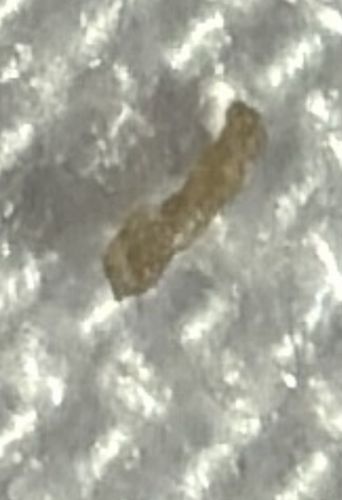
Casemaking Clothes Moth (larva)
Tinea pellionella
- Order & Family
- Order: Lepidoptera, Family: Tineidae
- Size
- Case length: 6mm - 10mm; Larva inside: slightly smaller
Natural Habitat
Indoor environments, particularly in darkened areas such as closets, cupboards, and storage bins where natural fibers are kept.
Diet & Feeding
Keratin-rich materials including wool, silk, fur, feathers, hair, and sometimes leather or dried organic matter. They do not eat synthetic fabrics.
Behavior Patterns
The larva constructs a portable silken case incorporating fibers from the substrate it is feeding on. It drags this case around for protection and eventually attaches it to a surface (often a wall or ceiling) to pupate. Adults are small, buff-colored moths that avoid light.
Risks & Benefits
Risks: Significant household pest that causes irreversible damage to clothing, upholstery, and carpets. Benefits: In the wild, they act as decomposers of animal remains like fur and feathers, recycling nutrients back into the ecosystem.