
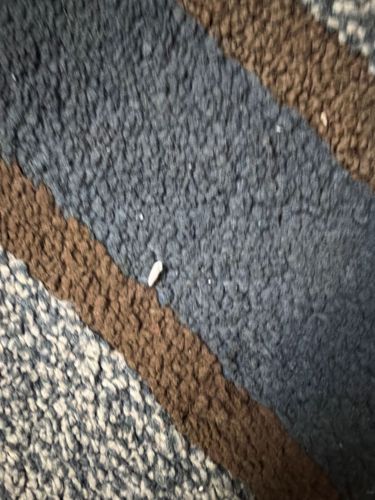
Community identification
Fly Larva (Maggot)
Family Muscidae (likely Musca domestica)
- Order & Family
- Order Diptera; Family Muscidae
- Size
- 3 to 12 mm depending on development stage
Natural Habitat
Moist organic matter, decaying food or waste, and domestic environments like carpets or kitchens if organic spills occur.
Diet & Feeding
Decaying organic matter, rotting food, animal waste, and bacterial films.
Behavior Patterns
Larvae are photophobic (hide from light) and prefer moist environments to avoid desiccation. They undergo three larval stages (instars) before pupating into adult flies.
Risks & Benefits
Risks: Can indicate sanitation issues and spread pathogens if they contact human food. Benefits: Act as decomposers in the environment, breaking down organic waste; some species are used in forensic entomology to determine time of death.