
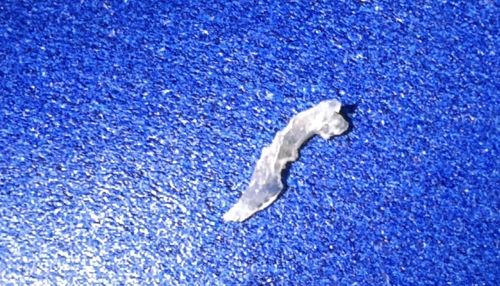
Community identification
Casemaking Clothes Moth (Larva/Case)
Tinea pellionella
- Order & Family
- Order: Lepidoptera; Family: Tineidae
- Size
- Larvae are roughly 1/4 to 1/2 inch (7–12 mm) long inside a protective silk case.
Natural Habitat
Indoor environments, particularly in closets, drawers, and storage areas where silk, wool, fur, or feathers are found.
Diet & Feeding
Keratin-containing materials such as wool, hair, fur, silk, felt, and feathers; they also occasionally consume leather and dried plant materials.
Behavior Patterns
The larva builds a silk case encrusted with fibers from its food source and carries it as it moves. They prefer dark, undisturbed areas and undergo complete metamorphosis (egg, larva, pupa, adult moth).
Risks & Benefits
Risks: Significant pest that causes damage to clothing, upholstery, and carpets. Benefits: Minimal in domestic settings; in nature, they help decompose animal debris like fur and feathers.