
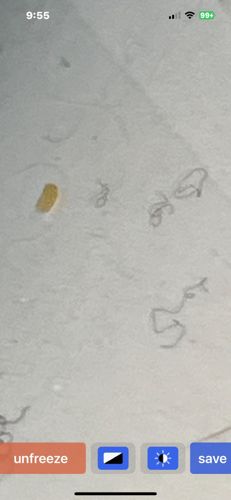
Fungus Gnat Larvae (or similar worm-like insect larva)
Sciaridae or Mycetophilidae (Larvae of Diptera)
- Order & Family
- Order: Diptera, Families: Sciaridae (dark-winged fungus gnats) or Mycetophilidae (true fungus gnats)
- Size
- Typically 3-10 mm (approx. 0.12-0.4 inches) in length, thin and whitish/translucent.
Natural Habitat
Moist, decaying organic matter; especially common in potting soil, compost, and areas with high humidity. They thrive in overwatered houseplants.
Diet & Feeding
Mainly feed on fungi, algae, and decaying plant matter in the soil. Some species can feed on the tender roots of plants, especially seedlings.
Behavior Patterns
The larvae are legless and worm-like, living in the top layers of moist soil. They are highly sensitive to moisture and will move deeper into the soil if it dries out. They can be seen wriggling on the surface of soil or emerging from drainage holes when conditions are excessively wet. Adults are small, dark, mosquito-like flies that are often seen flying around houseplants.
Risks & Benefits
Potential risks include damage to plant roots, especially in young plants or seedlings, leading to wilting and poor growth. Large infestations can be annoying due to the presence of adult flies. While generally considered a pest in horticulture, they play a role in decomposition in natural ecosystems.