
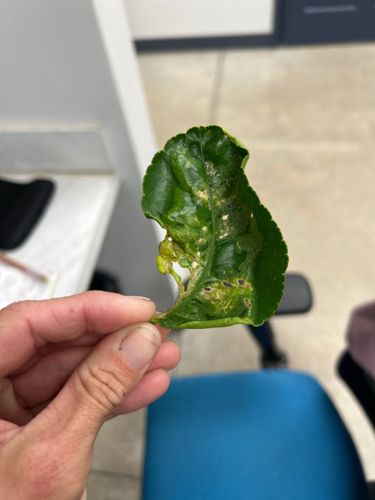
Citrus leafminer
Phyllocnistis citrella
- Order & Family
- Order: Lepidoptera, Family: Gracillariidae
- Size
- Adults: wingspan of 4-6 mm (0.16-0.24 inches). Larvae: up to 3 mm (0.12 inches) long.
Natural Habitat
Citrus leafminers are primarily found wherever citrus trees are grown, including orchards, nurseries, and home gardens. They thrive in warm, humid climates.
Diet & Feeding
The larvae of the citrus leafminer feed on the epidermal cells of young, tender citrus leaves, creating characteristic tunnels or 'mines'. They prefer new flush growth but can occasionally infest young fruit.
Behavior Patterns
The larva of the citrus leafminer creates distinctive serpentine mines within the leaf tissue, causing the leaves to curl, distort, and pucker. They pupate within the mine, often near the leaf margin after folding the leaf over. Adults are nocturnal, small moths that lay eggs on new flush leaves. They are highly active during warm weather and can produce multiple generations per year.
Risks & Benefits
Potential Risks: Citrus leafminers are significant pests of citrus, especially in young trees. Their feeding damage weakens host plants, reduces photosynthetic efficiency, and can stunt growth. While typically not lethal to mature trees, severe infestations can reduce fruit yield and quality. The damage also makes the trees more susceptible to citrus canker disease. Potential Benefits: There are no direct benefits of citrus leafminers to humans or the ecosystem. Their primary role is as a pest.