
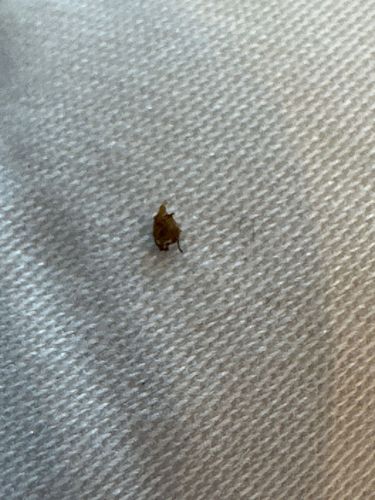
Deer Tick / Blacklegged Tick
Ixodes scapularis
- Order & Family
- Order: Ixodida, Family: Ixodidae
- Size
- Unfed larvae are less than 1 mm; unfed nymphs are about 1-2 mm (poppy seed size); unfed adult females are 3-5 mm (sesame seed size); unfed adult males are slightly smaller. After feeding, females can swell up to 10-12 mm.
Natural Habitat
Wooded areas, tall grasses, brush, and leaf litter. They thrive in humid environments and are often found at the edge of forests, in meadows, and in suburban areas that border natural habitats.
Diet & Feeding
Strictly hematophagous, feeding on the blood of mammals, birds, and sometimes reptiles and amphibians. Larvae typically feed on small mammals (e.g., mice), while nymphs and adults often feed on larger mammals, including deer and humans.
Behavior Patterns
Deer ticks are parasitic and require blood meals to complete their life cycle stages (larva, nymph, adult). They are not known to jump or fly, but instead wait on vegetation for a host to brush against them (questing behavior). They are most active during warmer months but can be found year-round if temperatures permit. Nymphs are particularly active in late spring/early summer and are responsible for a high percentage of Lyme disease transmissions.
Risks & Benefits
Risks: Deer ticks are vectors for several serious diseases, most notably Lyme disease, but also Anaplasmosis, Babesiosis, Powassan virus disease, and others. Their bites are typically painless, leading to delayed discovery. Benefits: They are a food source for some predators (e.g., certain birds, predatory insects), but their ecological benefits are generally outweighed by their risks as disease vectors.