
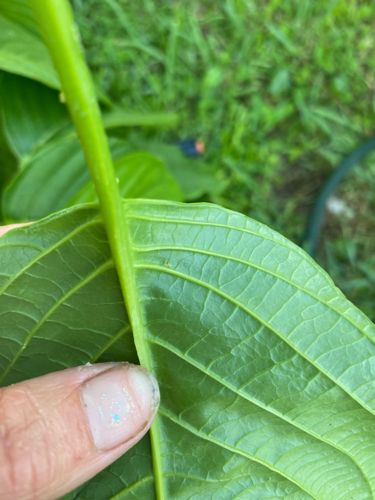
Aphid (likely a species of aphid, though specific identification is difficult from the image)
Too difficult to identify the exact species from the provided image. Common genera include Aphis, Myzus, Macrosiphum, etc.
- Order & Family
- Order: Hemiptera, Family: Aphididae
- Size
- Typically 1-10 mm in length, often very small and pear-shaped.
Natural Habitat
Found on the undersides of leaves, stems, and growing tips of plants in gardens, agricultural fields, greenhouses, and natural landscapes.
Diet & Feeding
Plant sap from a wide variety of host plants, including agricultural crops, garden plants, and wild plants. They are significant plant pests.
Behavior Patterns
Aphids reproduce rapidly, often through parthenogenesis (without mating), leading to quick population growth. They feed by inserting their stylets into plant tissue and sucking out sap. They excrete a sugary substance called honeydew, which can lead to sooty mold growth on plants. Many species are tended by ants, which protect them from predators in exchange for honeydew.
Risks & Benefits
Risks: Aphids are significant agricultural and garden pests. They cause damage by sucking sap (leading to stunted growth, distorted leaves, and reduced yields), and some species transmit plant viruses, which can be devastating to crops. Benefits: They can serve as a food source for beneficial insects like ladybugs, lacewings, and hoverfly larvae, which are natural predators.