
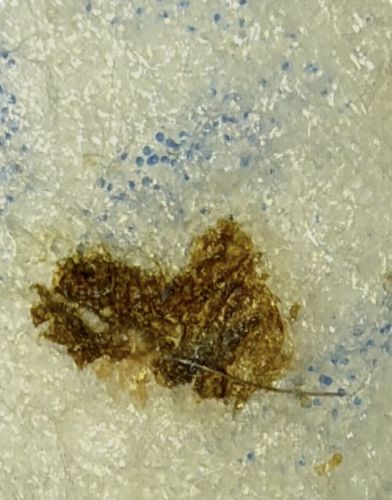
Case-bearing Clothes Moth (Larva/Case) or potentially Masked Hunter Nymph
Tinea pellionella (Moth) or Reduvius personatus (Masked Hunter)
- Order & Family
- Lepidoptera: Tineidae (Moth) or Hemiptera: Reduviidae (Masked Hunter)
- Size
- Larval case is typically 5-10 mm long.
Natural Habitat
Indoors in closets, carpets, dark corners, and dusty areas; often found on fabrics, wool, or accumulated lint.
Diet & Feeding
Clothes moth larvae feed on natural fibers containing keratin (wool, hair, fur, feathers) and detritus. Masked hunters are predators that eat other insects.
Behavior Patterns
Clothes moth larvae build a portable, camouflaged tube or case out of silk and debris (fibers, hairs, sand) which they drag around as they feed. Masked hunter nymphs cover their sticky bodies with dust and lint to camouflage themselves.
Risks & Benefits
Clothes moths are pests that damage fabrics, clothes, and rugs. Masked hunters are beneficial predators of household pests (like bed bugs) but can inflict a painful bite if handled. (Note: The object resembles biological debris like earwax or a scab, but if it is an insect, these are the primary species that camouflage with debris/fibers).