
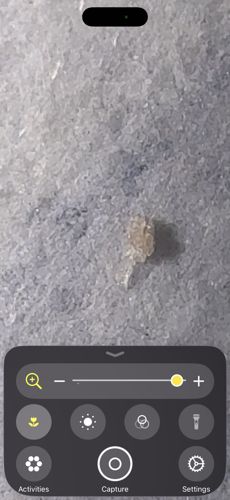
Case-bearing clothes moth (larva)
Tinea pellionella
- Order & Family
- Order Lepidoptera, Family Tineidae
- Size
- Larvae are typically 5 mm to 10 mm in length; the silk case they carry is slightly longer.
Natural Habitat
Indoor environments, particularly in closets, drawers, or areas with stored natural fibers like wool, silk, and fur.
Diet & Feeding
Larvae feed on keratins found in natural fibers, including wool, hair, fur, feathers, and sometimes silk or leather.
Behavior Patterns
The larva constructs a protective silk case covered in debris or material from its food source, which it carries while crawling and feeding. They move slowly and prefer dark, undisturbed areas. They undergo a complete metamorphosis from egg to adult moth.
Risks & Benefits
They pose a significant risk to household property, as they can cause extensive damage to clothing, carpets, and upholstery made from natural fibers. They do not bite or pose a direct health risk to humans, but are considered major domestic pests.