
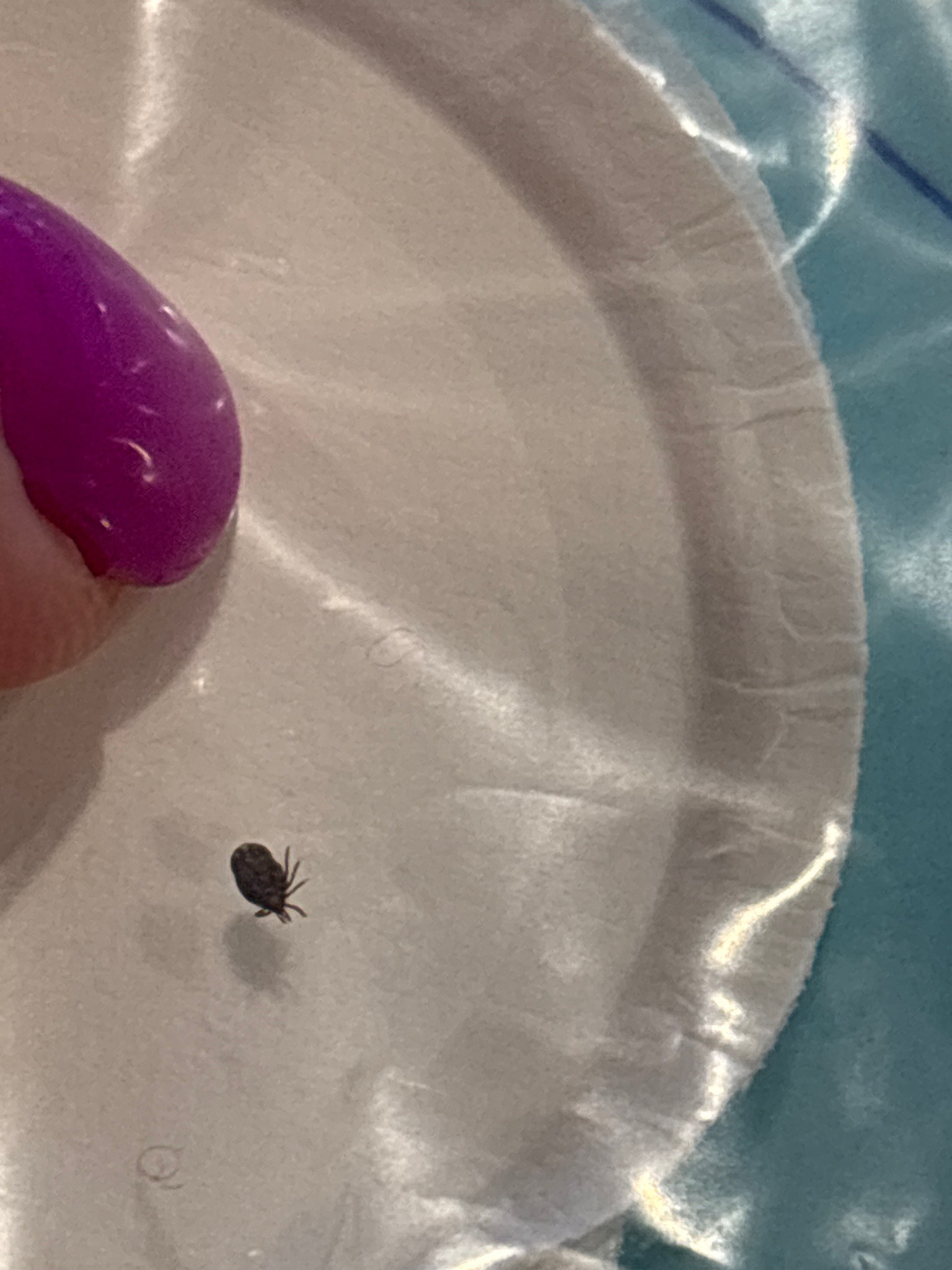
Community identification
American Dog Tick
Dermacentor variabilis
- Order & Family
- Ixodida, Ixodidae
- Size
- 3mm to 15mm depending on life stage and engorgement
Natural Habitat
Tall grass, low-lying brush, and wooded areas near paths
Diet & Feeding
Hematophagous; feeds exclusively on the blood of mammals including humans and dogs
Behavior Patterns
Uses 'questing' behavior to find hosts by waiting on vegetation with front legs outstretched. It has a life cycle consisting of four stages: egg, larva, nymph, and adult.
Risks & Benefits
Primary risk includes the transmission of Rocky Mountain spotted fever and tularemia; it can also cause tick paralysis in hosts. There are no known benefits to humans.