
Community identification
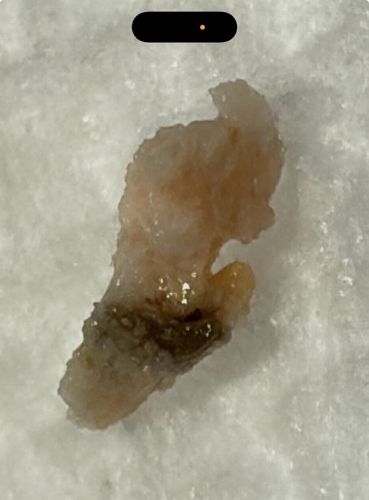
Tonsil Stone (Tonsillolith)
Tonsillolith
- Order & Family
- N/A (This is a biological formation, not an insect or organism)
- Size
- Typically 1-5 mm, but can grow larger
Natural Habitat
Human palatine tonsils (in the tonsillar crypts)
Diet & Feeding
N/A (Formed from calcified debris)
Behavior Patterns
Accumulates over time in tonsil crypts; often becomes dislodged during coughing, eating, or sneezing. It is composed of mucus, bacteria, dead skin cells, and food particles that calcify.
Risks & Benefits
Risks: Can cause significant bad breath (halitosis), sore throat, difficulty swallowing, or ear pain. Benefits: None.