
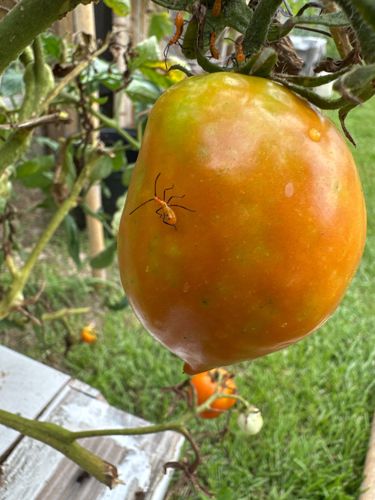
Leaf-footed Bug nymph (likely squash bug nymph in this stage, or another species from the Coreidae family)
Various species within the family Coreidae, such as Anasa tristis (Squash Bug) or Leptoglossus phyllopus (Eastern Leaf-footed Bug). The nymphs commonly look similar.
- Order & Family
- Order: Hemiptera, Family: Coreidae
- Size
- Nymphs typically range from a few millimeters (early instars) up to 1-2 cm (late instars and adults). Adult leaf-footed bugs can be up to 2.5 cm (1 inch) in length depending on the species.
Natural Habitat
Agricultural fields, gardens, orchards, and areas with suitable host plants. They are typically found on the stems, leaves, and fruits of the plants they feed on.
Diet & Feeding
Herbivorous. These bugs primarily feed on the sap and developing seeds of a wide variety of plants. They are particularly fond of fruits, vegetables, and ornamental plants. Specific hosts include tomatoes, squash, melons, beans, pecans, and many others.
Behavior Patterns
Leaf-footed bugs go through incomplete metamorphosis, developing from egg to nymph (which looks like a smaller version of the adult, but without fully developed wings) and then to adult. Nymphs often aggregate in groups, especially in earlier instars, as seen on the tomato in the image. They are active during the day and are known for their piercing-sucking mouthparts which they use to feed on plant sap and developing seeds or fruits. When disturbed, adults may fly away quickly or release a foul-smelling liquid as a defense mechanism.
Risks & Benefits
Risks: Leaf-footed bugs are considered significant agricultural pests. Their feeding can cause considerable damage to crops, leading to deformed fruits, necrotic spots, premature fruit drop, and overall reduced yield. They inject enzymes that cause tissue damage and can also transmit plant pathogens, although this is less common than direct feeding damage. Risks to humans are minimal, as they do not bite humans. Benefits: Generally none to the ecosystem from a human perspective; they are primarily considered pests.