
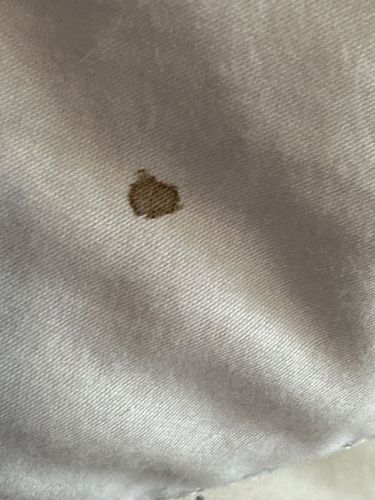
Bed Bug (blood stain/fecal spot)
Cimex lectularius
- Order & Family
- Order: Hemiptera, Family: Cimicidae
- Size
- (This refers to the size of the insect itself, not the stain) Adults are typically 4-5 mm (0.16-0.2 inches) long, similar to an apple seed. Nymphs are smaller and translucent.
Natural Habitat
Primarily indoor habitats where humans sleep or rest, such as beds, mattresses, bed frames, headboards, upholstered furniture, cracks in walls, under wallpaper, and in electrical outlets. They seek harborage close to their host.
Diet & Feeding
Exclusively blood (hematophagous), primarily from humans, but also from other warm-blooded animals if humans are not available. The image shows a fecal spot or a crushed bed bug, both of which would appear as dark, rusty or reddish-brown marks on fabric.
Behavior Patterns
Bed bugs are nocturnal and feed on blood while their hosts (humans or animals) are asleep. They are attracted to warmth and carbon dioxide. They are resilient and can survive for several months without a blood meal. Females lay 1-5 eggs per day, which hatch in about 1-2 weeks.
Risks & Benefits
Potential risks include itchy red welts from bites, allergic reactions, secondary skin infections from scratching, and significant psychological distress (anxiety, insomnia). They are not known to transmit diseases to humans. There are no known benefits to humans or the ecosystem from bed bugs.