
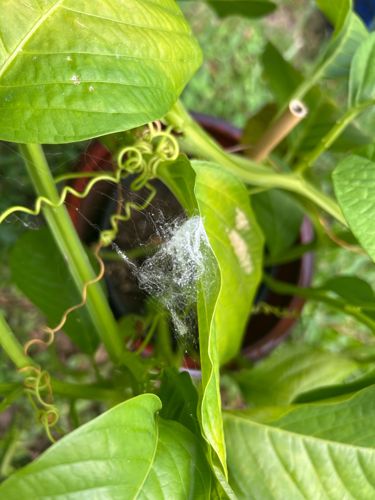
Spider Mite (specifically, the webbing strongly suggests Tetranychus urticae, the Two-spotted Spider Mite, a very common greenhouse and garden pest)
Tetranychidae (Family) - likely Tetranychus urticae
- Order & Family
- Order: Trombidiformes; Family: Tetranychidae (Spider Mites)
- Size
- Typically very small, adults ranging from 0.4 to 0.6 mm (approximately 1/50 of an inch).
Natural Habitat
Widely distributed globally, spider mites thrive in warm, dry environments. They are common agricultural and horticultural pests, found on a wide variety of plants including vegetables, fruits, ornamentals, and houseplants, both outdoors and in greenhouses or indoor growing spaces.
Diet & Feeding
Spider mites are plant sap-feeders. They use their piercing-sucking mouthparts to feed on plant cells, typically on the undersides of leaves, extracting chlorophyll and other plant fluids. This feeding causes characteristic stippling (tiny yellow or white spots) on the leaves, and eventually leads to leaf discoloration, wilting, and defoliation.
Behavior Patterns
Spider mites are known for spinning fine silk webbing, especially when infestations are severe, as seen in the image. This webbing helps them move between plant parts and offers some protection from predators and pesticides. They reproduce quickly, especially in hot, dry conditions, leading to rapid population growth and significant plant damage.
Risks & Benefits
Potential Risks: Spider mites are significant agricultural and horticultural pests. Their feeding can severely weaken plants, reduce yield in crops, and even kill susceptible plants if infestations are left unchecked. They can spread quickly between plants and are difficult to control due to their rapid reproduction and potential for pesticide resistance. Potential Benefits: In healthy ecosystems, they serve as a food source for various predatory insects and mites, helping to maintain ecological balance, though their pest status far outweighs any perceived benefits in agricultural settings.