
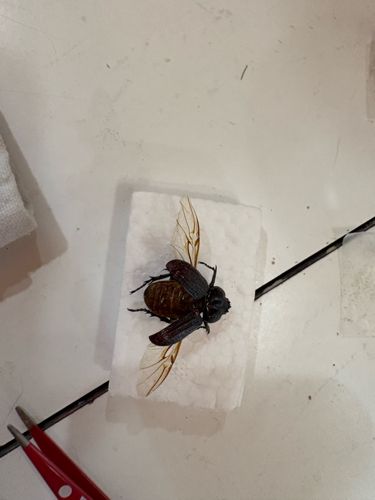
May Beetle / June Bug (Scarabaeidae family, likely Phyllophaga species)
Phyllophaga spp. (a genus within the Scarabaeidae family)
- Order & Family
- Order: Coleoptera, Family: Scarabaeidae
- Size
- Typically 12 to 25 mm (0.5 to 1 inch) in length.
Natural Habitat
Found in a variety of habitats including forests, woodlands, grasslands, agricultural fields, lawns, and gardens.
Diet & Feeding
Adult May Beetles feed on the leaves of various trees and shrubs, including oak, elm, maple, and fruit trees. The larvae (white grubs) live underground and feed on the roots of grasses, ornamental plants, and crops like corn and potatoes.
Behavior Patterns
May and June beetles are nocturnal and are attracted to lights at night. Adults emerge in late spring or early summer, mate, and lay eggs in the soil. Larvae (grubs) can live for 1-3 years in the soil before pupating and emerging as adults. They are generally slow-moving flyers.
Risks & Benefits
Risks: Larvae (white grubs) can be significant pests, causing damage to lawns, golf courses, and agricultural crops by feeding on roots. Large adult populations can defoliate trees and shrubs. Benefits: As part of the food chain, they serve as a food source for birds, mammals (like moles and skunks), and other predatory insects. Adult beetles can aid in pollination to a minor extent while feeding on leaves, though they are not primary pollinators.