
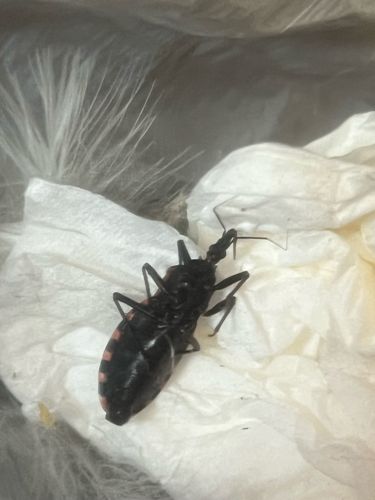
Kissing Bug
Triatominae (subfamily, common genera include Triatoma, Rhodnius, Panstrongylus)
- Order & Family
- Order: Hemiptera, Family: Reduviidae (subfamily Triatominae)
- Size
- Typically 0.5 to 1.5 inches (1.27 to 3.81 cm) in length.
Natural Habitat
They are typically found in cracks and crevices of poorly constructed homes (especially in rural areas), beneath rocks, bark, woodpiles, or in rodent burrows. They are common in Latin America, but certain species are also found in the southern United States.
Diet & Feeding
Kissing bugs are obligate hematophagous insects, meaning they feed exclusively on the blood of vertebrates. This includes humans, various mammals (like dogs, opossums, and rodents), and birds.
Behavior Patterns
Kissing bugs are primarily nocturnal. They are attracted to light, carbon dioxide, and warmth, which helps them locate hosts. They typically feed while the host is asleep and their bite is often painless, leading to the nickname 'kissing bug' due to their tendency to bite around the face. After feeding, they often defecate near the bite site, which is how the parasite Trypanosoma cruzi (if present) can enter the host's body.
Risks & Benefits
The primary risk associated with kissing bugs is their ability to transmit Trypanosoma cruzi, the parasite that causes Chagas disease. While the bite itself is not dangerous, the parasite can lead to chronic health problems affecting the heart and digestive system if left untreated. In their natural environment, they are part of the food chain for other insects and animals, but their role is outweighed by the disease transmission risk to humans and companion animals.