
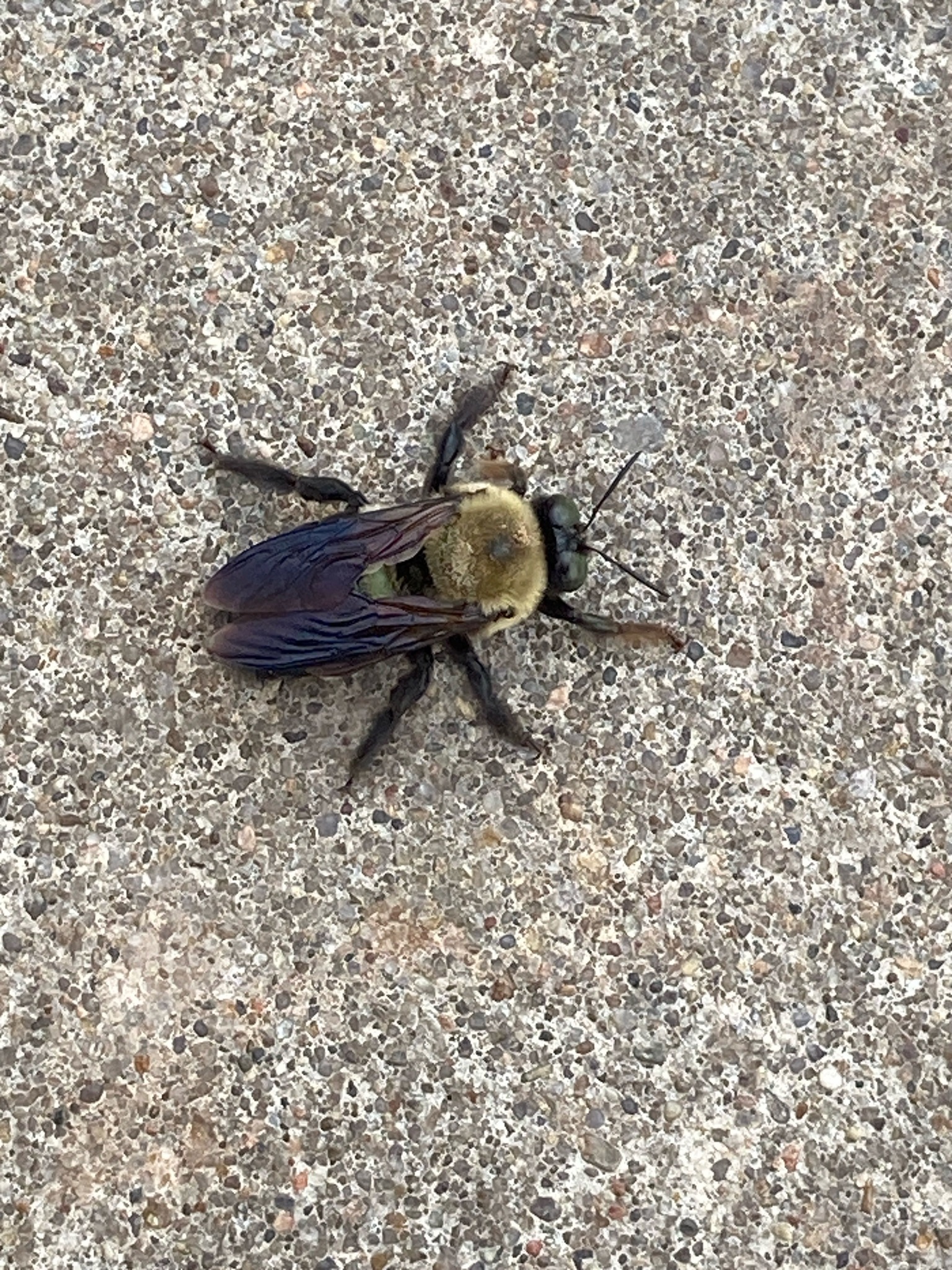
Community identification
Eastern Carpenter Bee
Xylocopa virginica
- Order & Family
- Hymenoptera, Apidae
- Size
- 19 to 23 mm (0.75 to 0.9 inches)
Natural Habitat
Gardens, parks, and wooded areas, often found near wooden structures like decks and eaves
Diet & Feeding
Nectar and pollen from a wide variety of flowers; they are known for 'robbery' by piercing the base of long flowers to reach nectar without pollinating
Behavior Patterns
Solitary but sometimes semi-social; they bore circular tunnels into dry wood to lay eggs. Males are territorial and hover near nests but lack a stinger, while females can sting but rarely do unless provoked.
Risks & Benefits
Benefits include being excellent pollinators for many plants. Risks include aesthetic and structural damage to wooden structures over time; while they can sting, they are generally non-aggressive to humans.