
Community identification
Ant
Formicidae (family)
- Order & Family
- Order: Hymenoptera; Family: Formicidae
- Size
- Typically 1 mm to 30 mm depending on species; the specimens shown are likely small household ants (~2-3 mm).
Natural Habitat
Global distribution; found in soil, under rocks, in trees, and frequently inside human structures searching for food.
Diet & Feeding
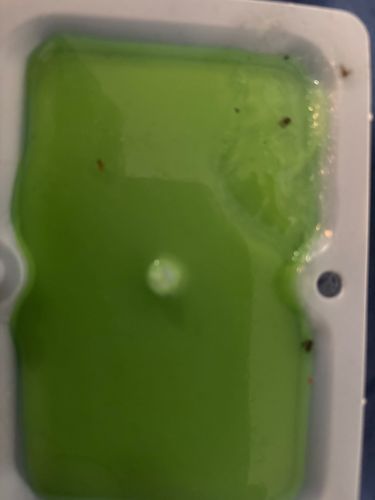
Omnivorous; they scavenge for sweets (glucose/nectar), proteins (other insects), and fats. They are highly attracted to liquid bait/sugary substances as seen in the image.
Behavior Patterns
Eusocial insects living in large colonies. They use pheromone trails to guide nestmates to food sources. Foraging is often most active during the day or when a stable food source is located.
Risks & Benefits
Risks: Can be household pests, contaminate food, and some species can sting or bite. Benefits: Essential ecosystem roles including soil aeration, seed dispersal, and decomposition of organic matter.