
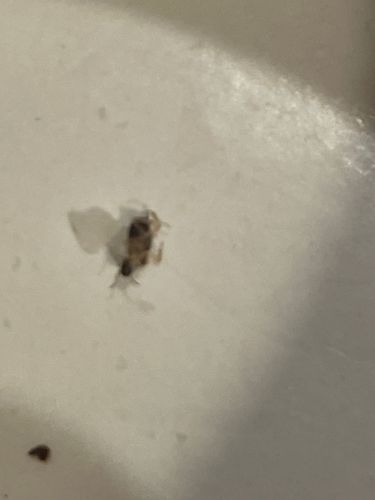
Flea (likely Cat Flea or Dog Flea)
Ctenocephalides spp. (e.g., Ctenocephalides felis, Ctenocephalides canis)
- Order & Family
- Order: Siphonaptera, Family: Pulicidae (e.g., Ctenocephalides felis for cat flea, Ctenocephalides canis for dog flea)
- Size
- Typically 1-4 mm (0.04-0.16 inches) in length.
Natural Habitat
Fleas are found globally wherever their hosts (e.g., cats, dogs, rodents, birds, humans) live. Eggs and larvae are often found in carpets, bedding, cracks in floorboards, and other protected areas where pets frequent. Adults live on the host.
Diet & Feeding
Strictly hematophagous, meaning they feed on the blood of mammals and birds.
Behavior Patterns
Fleas are excellent jumpers, able to leap great distances relative to their size. They are parasitic and spend much of their lives on a host, feeding on blood. Their life cycle includes egg, larva, pupa, and adult stages, with adults emerging from pupal cocoons when a host is detected nearby through vibrations, heat, and carbon dioxide.
Risks & Benefits
Risks: Fleas can cause severe itching, skin irritation, and allergic reactions (flea allergy dermatitis) in pets and humans. They can also transmit diseases such as tapeworms (Dipylidium caninum) and, historically, the plague (Yersinia pestis, though this is less common with modern fleas in developed countries). Benefits: None for humans, but they are a food source for some predatory insects and arachnids in natural ecosystems.