
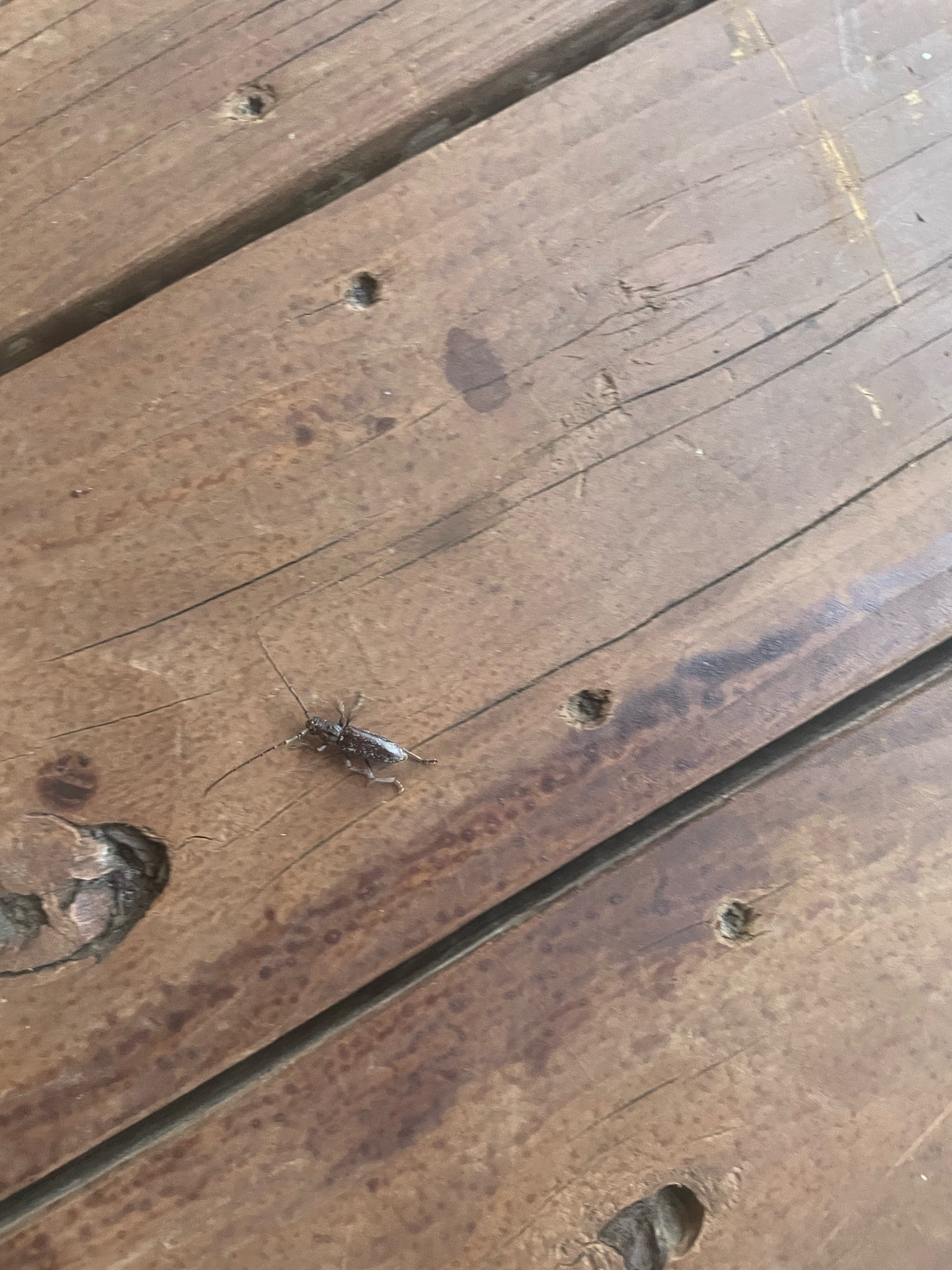
Community identification
Whitespotted Sawyer Beetle
Monochamus scutellatus
- Order & Family
- Order: Coleoptera; Family: Cerambycidae
- Size
- 18 to 31 mm (excluding antennae)
Natural Habitat
Coniferous forests throughout North America; frequently found near burned, dead, or dying pine, spruce, and balsam fir trees.
Diet & Feeding
Adults feed on the bark of conifer twigs; larvae (woodworms) tunnel into and feed on the wood of dead or dying conifers.
Behavior Patterns
Diurnal insects known for their extremely long antennae; they are attracted to the scent of burnt timber and often colonize forests after fires. They undergo a complete metamorphosis from egg to adult within tree trunks.
Risks & Benefits
Harmless to humans as they do not sting or carry diseases, though their mandibles can pinch if handled. They play a vital role in the ecosystem by breaking down dead wood, but can cause economic damage to the timber industry by degrading logs.