
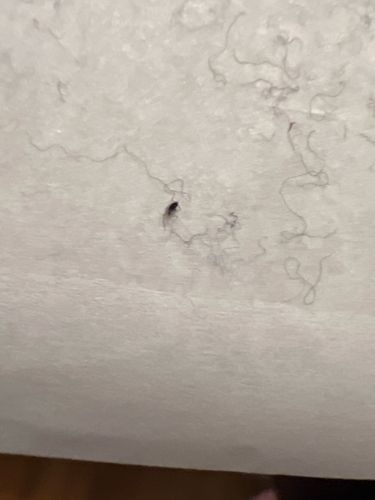
Flea (possibly human flea or cat flea)
Pulex irritans (human flea) or Ctenocephalides felis (cat flea)
- Order & Family
- Siphonaptera, Pulicidae
- Size
- 1.5 mm to 4 mm (0.06 to 0.16 inches) in length.
Natural Habitat
Fleas thrive in warm, humid environments. They are commonly found in carpets, bedding, pet resting areas, cracks in floors, and anywhere their hosts spend time. They live on and feed off the blood of mammals and birds.
Diet & Feeding
Adult fleas are obligate hematophagous parasites, meaning they feed exclusively on the blood of their hosts. Larvae feed on organic debris, including adult flea feces (which contains digested blood).
Behavior Patterns
Fleas are excellent jumpers, able to leap significant distances relative to their size. They are attracted to body heat, movement, and exhaled carbon dioxide, which helps them locate hosts. Their life cycle consists of egg, larva, pupa, and adult stages, with adults typically remaining on the host. Bites usually occur in clusters and are often itchy. They can remain in pupal stage for extended periods, emerging when a host is detected.
Risks & Benefits
Potential risks include itchy bites, allergic reactions (flea allergy dermatitis in pets), and transmission of diseases such as murine typhus and plague (historically significant, less common today in many areas). They can also transmit tapeworms (Dipylidium caninum) to pets and, rarely, humans. There are no known direct benefits of fleas to humans; their ecological role is primarily as parasites.