
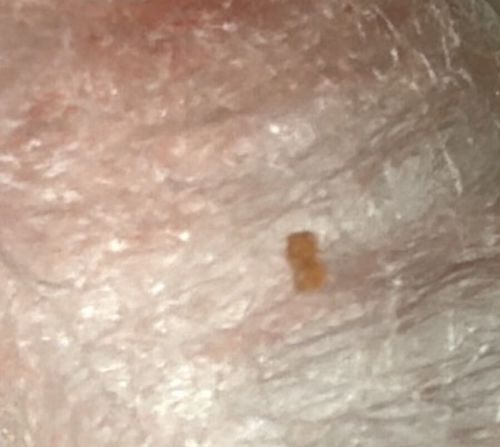
Pubic Louse (Crab Louse)
Pthirus pubis
- Order & Family
- Order: Psocodea, Family: Pthiridae
- Size
- 1.1 to 1.8 mm (about the size of a pinhead)
Natural Habitat
Exclusively on humans, primarily inhabiting coarse terminal hairs in the pubic and perianal regions, but can also be found on chest hair, armpits, facial hair, or eyelashes.
Diet & Feeding
Obligate hematophage; they feed exclusively on human blood several times a day.
Behavior Patterns
They are sedentary and move very little once they have grasped a hair. They spread primarily through close physical contact, particularly sexual contact. Unlike head lice, they cannot jump; they crawl from hair to hair.
Risks & Benefits
Risks: Causes intense itching (pruritus) due to an allergic reaction to their saliva. Can cause bluish spots (maculae caeruleae) on the skin and secondary bacterial infections from scratching. They are an indicator of intimate contact and potential for other STIs. Benefits: None; they are human parasites.