
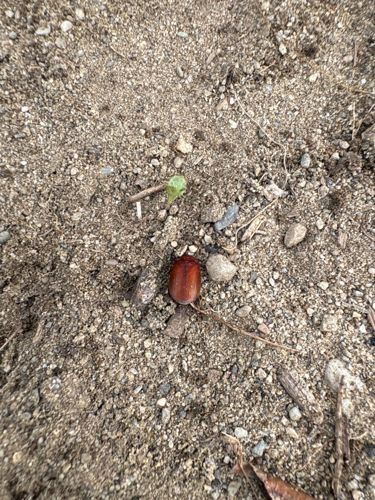
Acorn
Quercus (genus)
- Order & Family
- Kingdom: Plantae, Family: Fagaceae (Oak Family), Genus: Quercus
- Size
- Typically 1-6 cm in length, depending on the oak species.
Natural Habitat
Oak forests, woodlands, and urban areas where oak trees are present. Acorns are found on the ground beneath oak trees.
Diet & Feeding
Acorns are the seeds of oak trees and do not have a diet. The oak tree itself is an autotroph, producing its own food through photosynthesis.
Behavior Patterns
It appears to be an acorn, which is the nut of oak trees, not an insect. Acorns are seeds and are dormant until conditions are right for germination. They are dispersed by wind, water, and animals, particularly squirrels and jays. They do not exhibit behaviors associated with insects.
Risks & Benefits
Acorns provide a significant food source for wildlife, including squirrels, deer, and birds. They are crucial for forest regeneration as they sprout into new oak trees. For humans, acorns can be processed into flour for consumption, though they contain tannins that need to be leached out. There are no direct risks to humans from acorns unless consumed raw in large quantities due to tannins.