
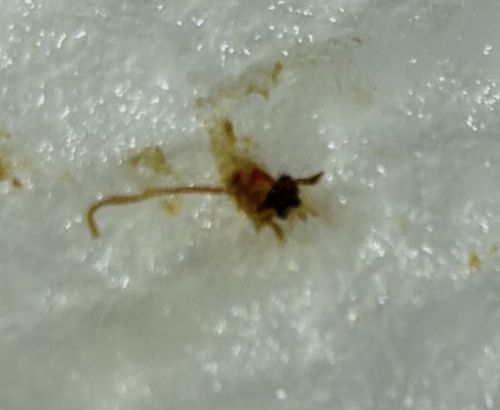
Clover Mite
Bryobia praetiosa
- Order & Family
- Order: Trombidiformes, Family: Tetranychidae (Spider mites)
- Size
- extremely small, typically 0.75 mm to 0.85 mm (smaller than a pinhead)
Natural Habitat
Primarily found outdoors in lawns, grasses, and clover patches. They frequently engage in accidental invasions of homes and buildings, particularly around windows and sunny interior walls during the spring and autumn months.
Diet & Feeding
Herbivorous; they feed on plant fluids/sap from clover, lawn grasses, ornamental plants, and weeds.
Behavior Patterns
They are active during cooler weather in spring and fall and tend to congregate on the sunny south or west sides of buildings. They are distinguished by their long front legs, often mistaken for antennae. Unlike many pests, they reproduce through parthenogenesis (females laying unfertilized eggs).
Risks & Benefits
They are a nuisance pest rather than a health threat; they do not bite humans or animals, do not feed on blood, and do not transmit diseases. The main risk is cosmetic: crushing them releases a red body fluid (pigment, not blood) that can permanently stain walls, curtains, and fabrics.