
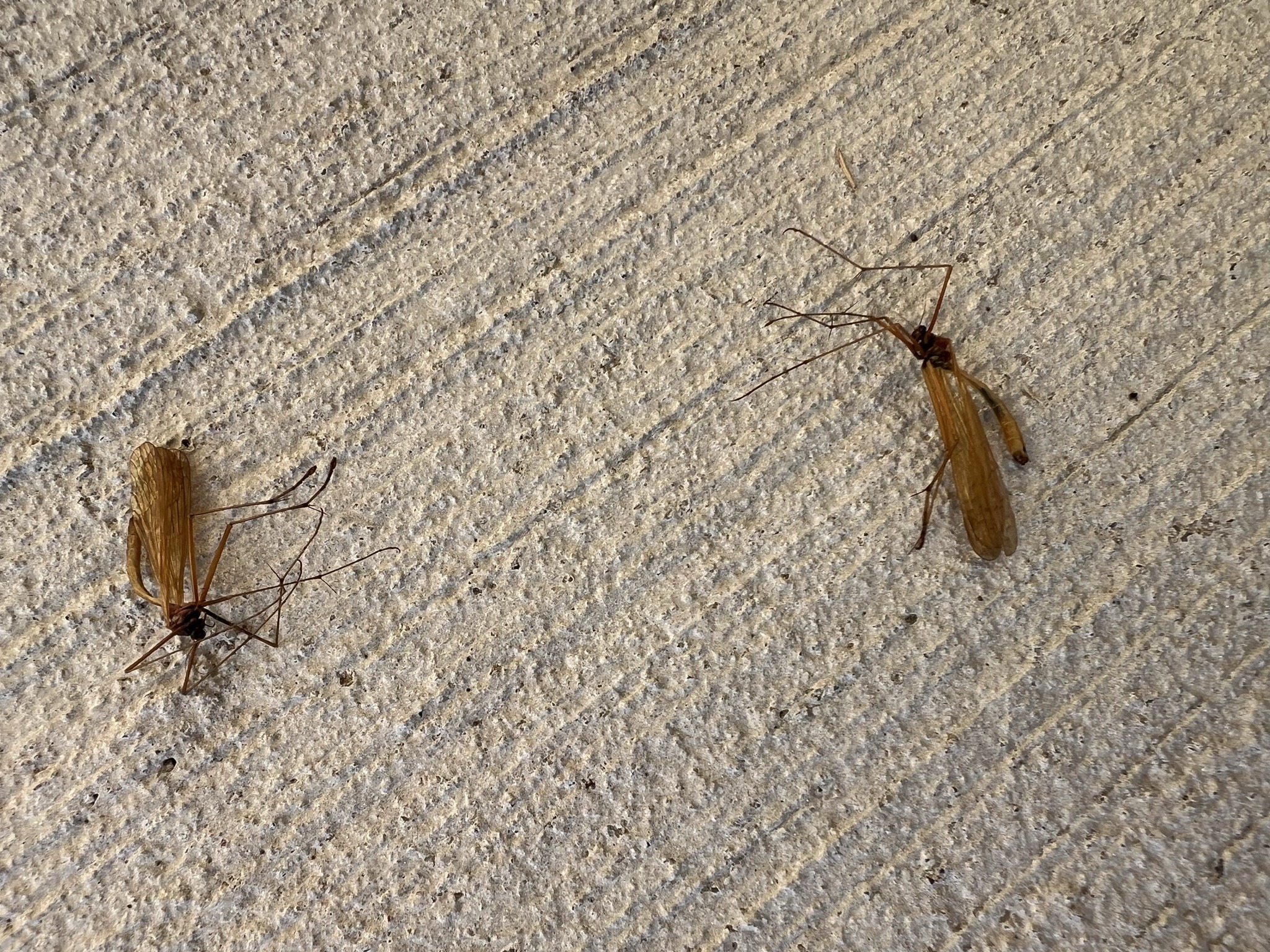
Community identification
Crane Fly
Tipula sp.
- Order & Family
- Order Diptera, Family Tipulidae
- Size
- Commonly 10 to 65 mm (0.4 to 2.5 inches) long with a very large wingspan.
Natural Habitat
Damp or moist areas with rich organic matter, including lawns, fields, meadows, and near bodies of fresh water.
Diet & Feeding
Adults often do not eat and have short lifespans; some may feed on nectar or moisture. Larvae (known as 'leatherjackets') feed on decaying organic material or plant roots.
Behavior Patterns
Adults are often attracted to porch lights at night and are frequently seen resting on walls or bumping against windows. They serve as an important food source for birds, fish, and other wildlife.
Risks & Benefits
They are completely harmless to humans as they do not bite or sting. In the ecosystem, they are beneficial as decomposers and a food source, though the larvae can occasionally damage turf grass if populations are very high.