
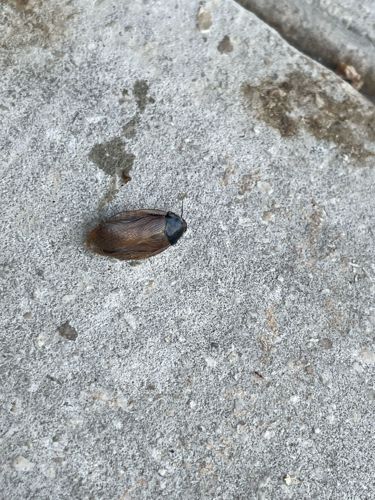
Cockroach
There are many species, likely Blattella germanica, Periplaneta americana, or Blatta orientalis based on appearance.
- Order & Family
- Blattodea (Order), Blattidae or Blattellidae (Family)
- Size
- Common pest species typically range from 0.5 inches (1.2 cm) to 2 inches (5 cm) in length.
Natural Habitat
Warm, humid, and dark environments, often indoors in kitchens, bathrooms, basements, wall voids, and sewers. Can also be found outdoors in leaf litter, under rocks, or in woodpiles.
Diet & Feeding
Omnivorous scavengers. They eat almost anything organic, including food scraps, decaying matter, grease, starch, paper, fabric, and even other insects.
Behavior Patterns
Mostly nocturnal, hiding in cracks and crevices during the day. They are fast runners and can be difficult to catch. They reproduce quickly, with females laying egg cases (oothecae) containing multiple eggs. Some species can fly or glide, though many common pest species prefer to run.
Risks & Benefits
Risks: Can carry and spread bacteria (like Salmonella and E. coli), viruses, fungi, and parasites, contaminating food and surfaces. Their droppings and shed skins can trigger allergies and asthma in sensitive individuals. They are considered pests due to property damage and health risks. Benefits: In natural ecosystems outdoors, some species play a role as decomposers, breaking down organic matter.