
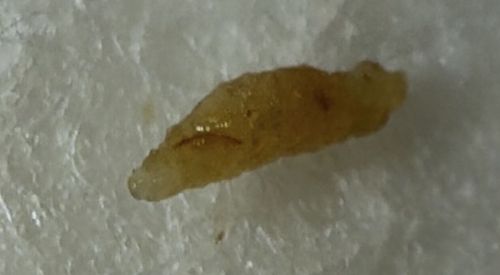
Community identification
Fruit Fly Larva (Maggot)
Drosophila melanogaster (most common)
- Order & Family
- Order: Diptera, Family: Drosophilidae
- Size
- Typically 1 to 5 millimeters long; they are very small and often require magnification to see details clearly.
Natural Habitat
Found near decaying organic matter, especially overripe fruits, vegetables, garbage disposals, drains, and spills of fermented liquids like beer or wine.
Diet & Feeding
They feed on fungi (yeast) and bacteria growing on rotting plant material and fruits.
Behavior Patterns
Larvae hatch from eggs laid in rotting material and feed voraciously for several days. They then migrate to a drier location to pupate. The life cycle is extremely rapid, completing in about a week under ideal warm conditions.
Risks & Benefits
Risks: Can be a significant nuisance in homes and restaurants; potential to spread bacteria; can spoil food. Benefits: Extremely important model organism for genetic research.