
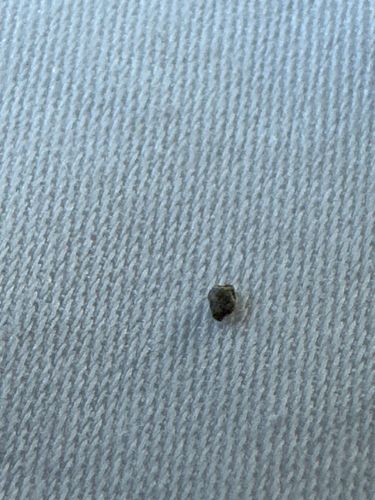
Case-bearing Clothes Moth
Tinea pellionella
- Order & Family
- Order: Lepidoptera, Family: Tineidae
- Size
- Larvae grow up to 10-15 mm (0.4-0.6 inches). Adults have a wingspan of 9-16 mm (0.35-0.63 inches). The 'bug' in the image, likely a larva within its case, would appear as a small, roughly 3-5 mm (0.12-0.2 inches) pellet-like object.
Natural Habitat
Indoors, typically found in dark, undisturbed areas where natural fibers are stored, such as closets, attics, under furniture, or in storage chests. They infest items like woolens, carpets, upholstered furniture, furs, and taxidermy specimens.
Diet & Feeding
Larvae feed on natural fibers, especially those of animal origin such as wool, silk, fur, felt, and feathers. They can also consume blends and materials soiled with food spills, sweat, or urine. Unlike many other pests, they do not require moisture for digestion.
Behavior Patterns
Case-bearing clothes moth larvae are known for constructing and carrying a portable case made of silk and fabric fibers. They remain inside this case, only exposing their head and legs to move and feed. The case grows with the larva, being enlarged or rebuilt as needed. Adults are nocturnal and not attracted to light, preferring dark areas.
Risks & Benefits
Risks: Significant economic pest due to damage to clothing, carpets, upholstery, and other items made of natural fibers. They do not bite humans or transmit diseases. Benefits: None usually attributed to humans directly—they are primarily considered a pest.