
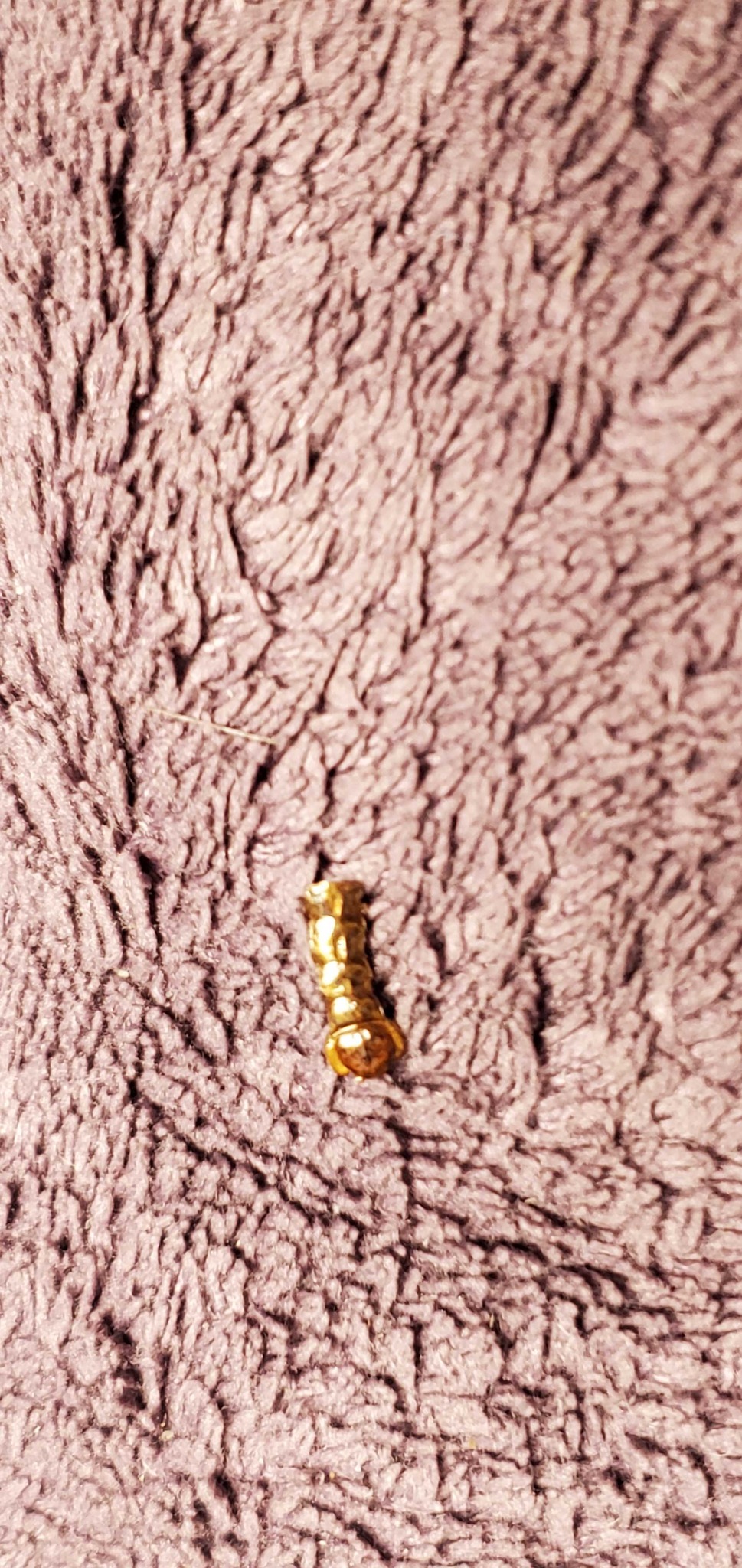
Casemaking Clothes Moth (larva)
Tinea pellionella
- Order & Family
- Order Lepidoptera, Family Tineidae
- Size
- Case length typically 6 mm to 10 mm (1/4 to 3/8 inch); larva inside is slightly smaller.
Natural Habitat
Indoor environments, particularly in closets, drawers, or storage areas where animal-based fibers are present; also found in bird nests.
Diet & Feeding
Larvae feed on keratin-containing materials such as wool, feathers, fur, hair, upholstered furniture, and silk. They do not eat synthetic fabrics unless blended with natural fibers.
Behavior Patterns
Larvae construct a portable silken case incorporating debris and fibers from their food source. They carry this case as they move and feed, eventually pupating within it. Unlike webbing clothes moths, they rarely leave silk trails.
Risks & Benefits
Significant household pest capable of damaging expensive clothing, rugs, and heirlooms. Do not bite humans or pets. Beneficial in nature as decomposers of animal remains like fur and feathers.