
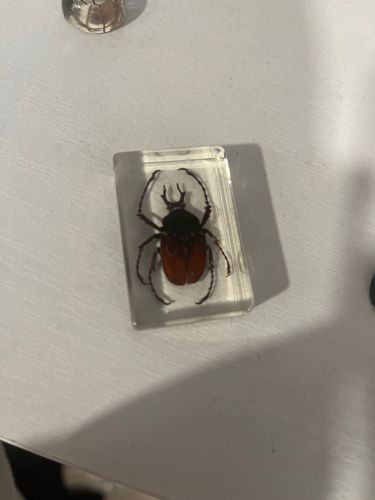
Rhinoceros Beetle (likely a species of Dynastes or Oryctes)
Dynastinae (subfamily, specific species cannot be determined definitively from image)
- Order & Family
- Order: Coleoptera, Family: Scarabaeidae, Subfamily: Dynastinae
- Size
- Typically 1 to 6 inches (2.5 to 15 cm), some species can be larger.
Natural Habitat
Tropical and subtropical regions worldwide, often found in forests, woodlands, and areas with decaying wood or vegetation.
Diet & Feeding
Adults primarily feed on decaying plant material, sap, fruit, and nectar. Larvae feed on decaying wood, compost, and other organic matter.
Behavior Patterns
Nocturnal, strong flyers, males often have prominent horns used for fighting other males over mates or breeding sites. Larvae develop in decaying wood or soil for several years before pupating.
Risks & Benefits
Generally harmless to humans. Their larvae are important decomposers, breaking down dead wood and recycling nutrients in ecosystems. Some species can occasionally be pests in agriculture, damaging crops or trees, but this is less common for the larger forest-dwelling types.