
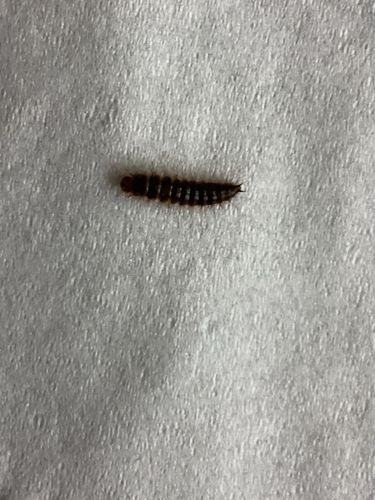
Carpet Beetle Larva
Dermestes spp., Anthrenus spp., Trogoderma spp. (specific species depending on exact morphology, which is difficult to determine from this image alone)
- Order & Family
- Order: Coleoptera, Family: Dermestidae
- Size
- Typically 2-5 mm in length, though some species' larvae can be slightly larger.
Natural Habitat
Carpet beetle larvae are commonly found indoors, in homes, museums, warehouses, and other buildings. They prefer dark, undisturbed areas such as under carpets, in closets, inside upholstered furniture, in seldom-used drawers, and around baseboards where lint and pet hair accumulate.
Diet & Feeding
Carpet beetle larvae are scavengers and detritivores. Their diet primarily consists of natural fibers such as wool, silk, fur, feathers, and leather, as well as dead insects, animal carcasses, stored food products (grains, cereals), and pet food. They are known to cause damage to carpets, clothing, furniture, and museum specimens.
Behavior Patterns
Carpet beetle larvae are typically found in dark, undisturbed areas where their food sources are abundant. They are slow-moving and often retreat into cracks and crevices when disturbed. They undergo complete metamorphosis, with larvae molting multiple times before pupating and emerging as adult beetles. Larval stages can last for several months to a year depending on conditions and food availability.
Risks & Benefits
Risks: Carpet beetle larvae are significant household pests, causing damage to textiles, clothing, carpets, and stored food products. They do not bite or sting humans, but some individuals may experience allergic reactions (dermatitis) to the bristly hairs shed by the larvae. Benefits: In natural environments, dermestid beetles play a role as decomposers, helping to break down organic matter like animal carcasses and dried plants. However, their presence indoors is almost exclusively a pest issue.