
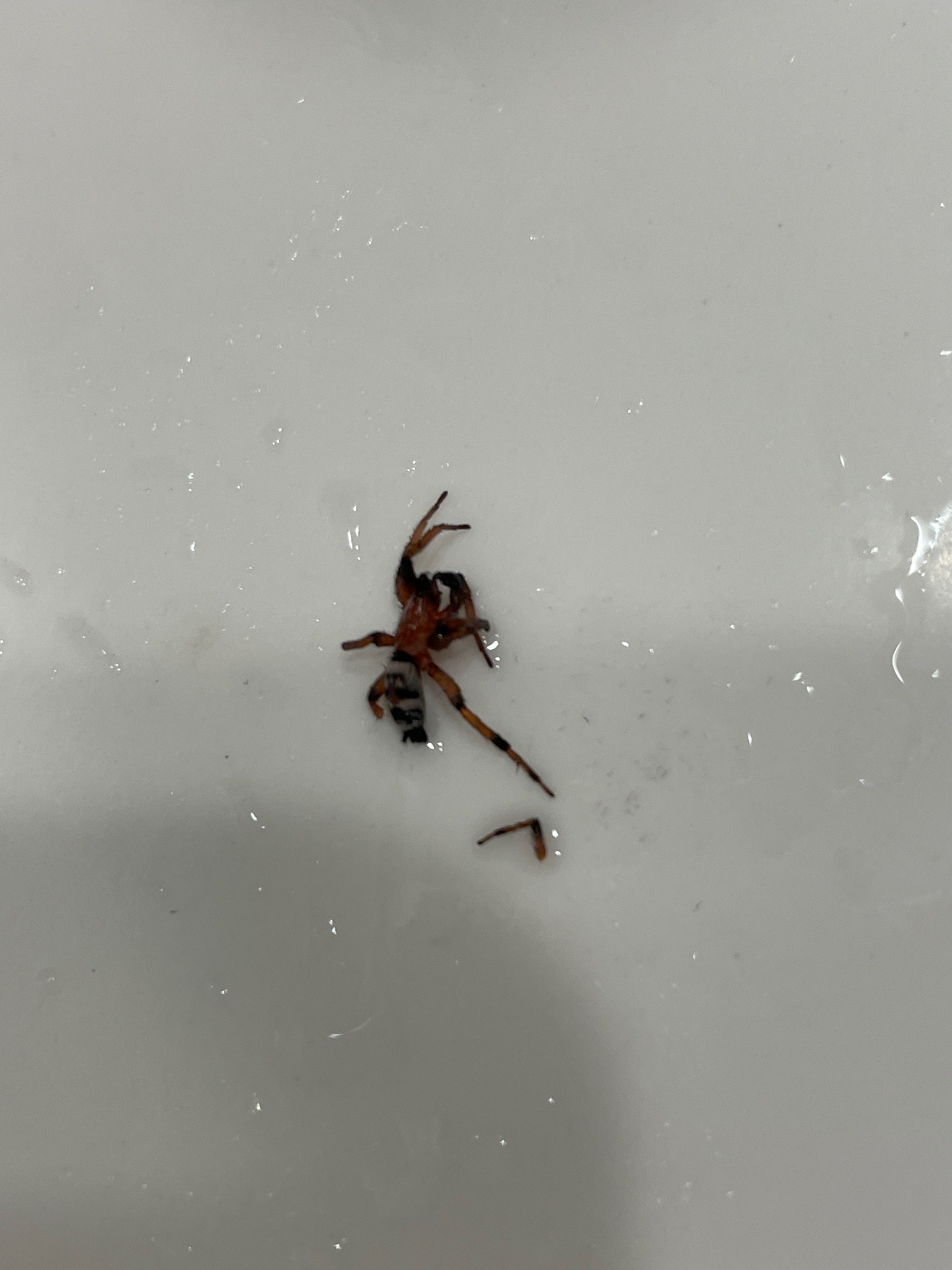
Community identification
Woodlouse Hunter Spider
Dysdera crocata
- Order & Family
- Araneae, Dysderidae
- Size
- Body length 9–15 mm (excluding legs)
Natural Habitat
Typically found in damp places under rocks, logs, or leaf litter; commonly enters homes in basements or bathrooms.
Diet & Feeding
Strictly carnivorous, primarily preying on woodlice (sowbugs or pillbugs) using their large chelicerae.
Behavior Patterns
Nocturnal hunters that do not spin webs to catch prey; they use silk only for retreats or egg sacs. They are active year-round in milder climates.
Risks & Benefits
Generally beneficial as they control pest populations; while they have large fangs and can bite if handled, their venom is not medically significant to humans.