
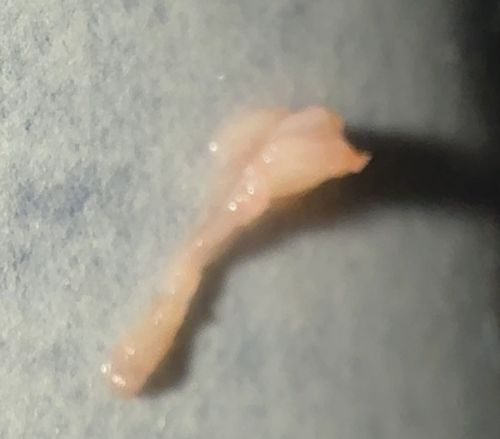
Community identification
Pinworm
Enterobius vermicularis
- Order & Family
- Order: Oxyurida, Family: Oxyuridae
- Size
- 2 to 13 millimeters (females are larger than males)
Natural Habitat
The human gastrointestinal tract, specifically the large intestine and rectum.
Diet & Feeding
Intestinal contents and epithelial cells within the human gut.
Behavior Patterns
Female worms migrate to the perianal area at night to deposit eggs, which often causes intense itching. The life cycle depends on human-to-human transmission via ingestion of eggs.
Risks & Benefits
Risks include perianal itching (pruritus ani), disturbed sleep, and potential secondary bacterial infections from scratching. They provide no known ecological benefit to humans; medical consultation is recommended for treatment.