
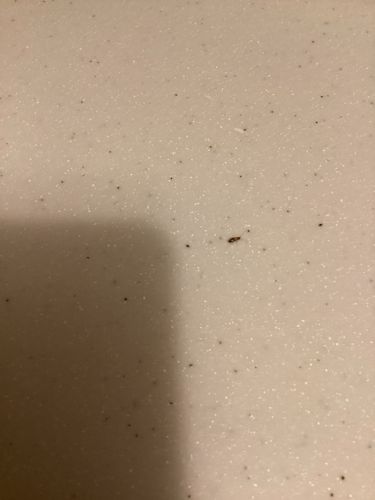
Community identification
Ghost ant
Tapinoma melanocephalum
- Order & Family
- Order: Hymenoptera; Family: Formicidae
- Size
- 1.3 to 1.5 mm long
Natural Habitat
Indoor environments such as kitchens and bathrooms (near moisture); outdoors in leaf litter and under loose bark in tropical and subtropical regions.
Diet & Feeding
Honeydew from aphids and mealybugs; scavenges for sweets, grease, and protein in human homes.
Behavior Patterns
Notable for their erratic, fast-paced running when disturbed; they form multiple interconnected colonies and can nest in very small spaces.
Risks & Benefits
Primarily a nuisance pest in homes. They do not sting and their bite is negligible, but they can contaminate food and crawl across surfaces in large numbers. Ecosystem benefit: they assist in natural pest control and nutrient recycling.