
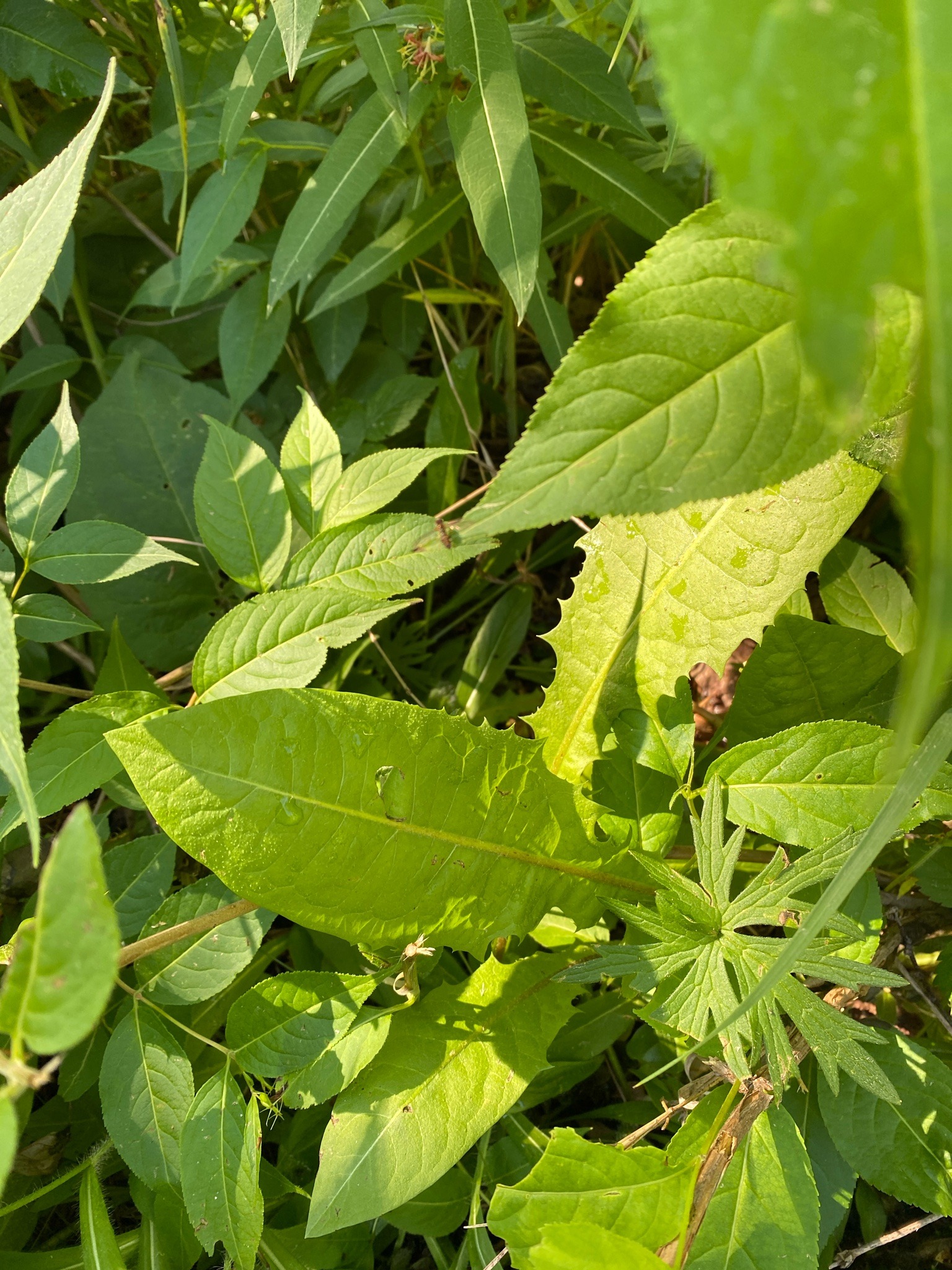
Community identification
Lesser Meadow Katydid
Conocephalus fasciatus
- Order & Family
- Orthoptera, Tettigoniidae
- Size
- 15 to 22 mm (approx. 0.6 to 0.9 inches)
Natural Habitat
Tall grass, meadows, roadsides, and marshy areas across North America.
Diet & Feeding
Opportunistic omnivores; they feed on grasses, seeds, wildflowers, and occasionally small insects like aphids.
Behavior Patterns
Nymphs and adults are active during the day. Males produce a high-pitched buzzing song to attract mates. They are known for their long antennae and powerful hind legs used for jumping.
Risks & Benefits
They pose no risk to humans as they do not bite or sting. They are beneficial to the ecosystem as both a food source for birds and spiders, and as occasional predators of plant pests.