
Community identification
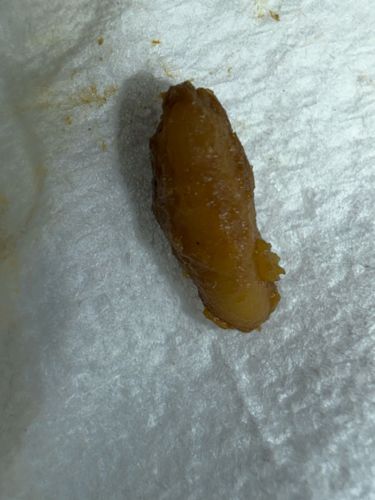
Fly Puparium (Likely Muscoid Fly)
Muscidae sp. (e.g., Musca domestica)
- Order & Family
- Order: Diptera; Family: Muscidae
- Size
- 5 mm to 8 mm (approx. 1/4 inch)
Natural Habitat
Found in warm, moist environments near organic decay, such as soil, garbage, or compost; often found indoors if a breeding source is nearby.
Diet & Feeding
Does not eat in the pupal stage. Larvae (maggots) feed on decaying organic matter, bacteria, and liquids.
Behavior Patterns
This is the non-feeding, immobile life stage between larva and adult. Inside this hardened case (puparium), the insect undergoes complete metamorphosis into an adult fly over 2–6 days.
Risks & Benefits
Risks: Adults coming from these pupae can spread pathogens causing diseases like salmonella or E. coli. Benefits: Larvae help decompose waste and are scavengers in the ecosystem.