
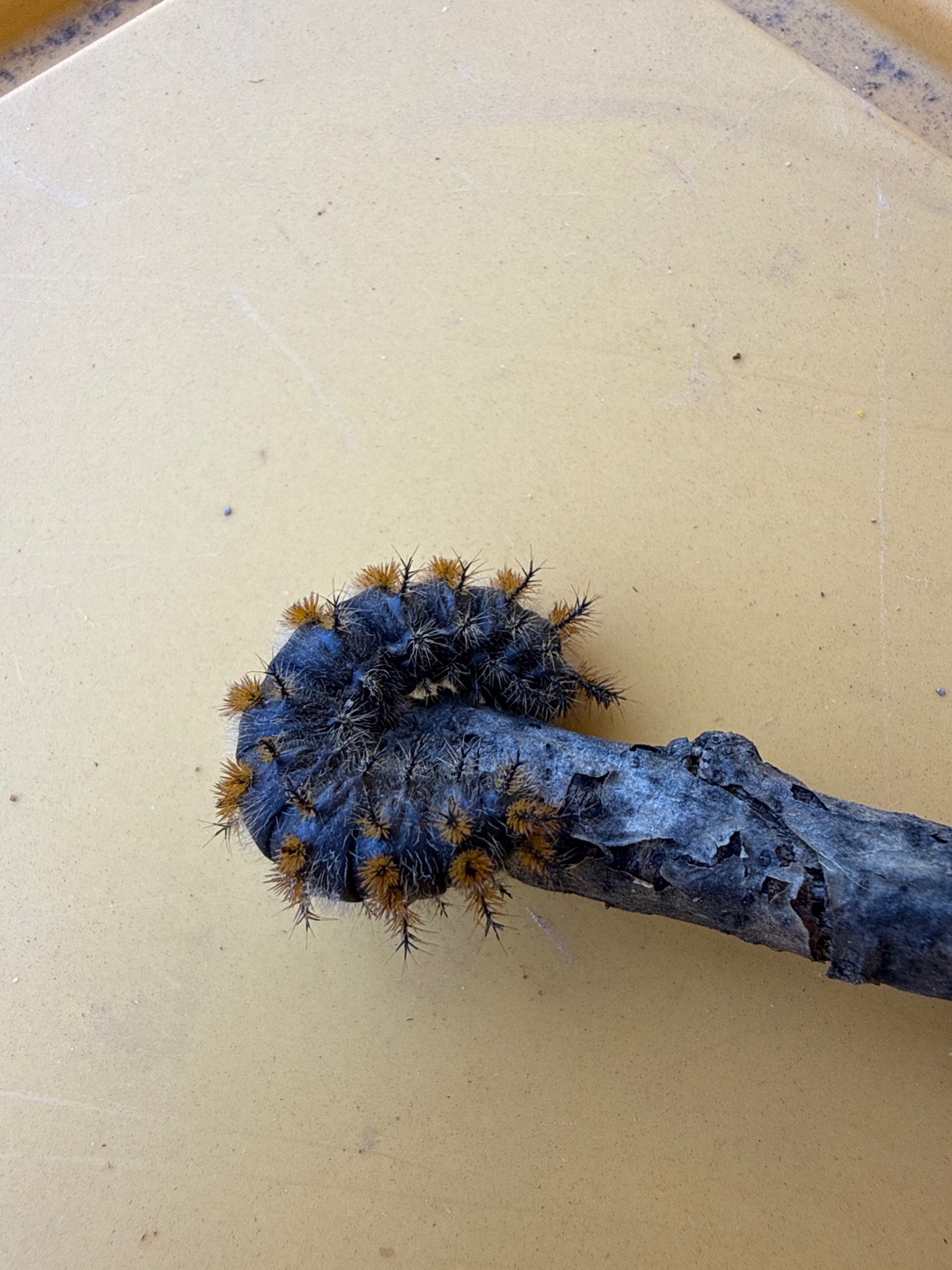
Community identification
Buck Moth Caterpillar
Hemileuca maia
- Order & Family
- Lepidoptera, Saturniidae
- Size
- Up to 2.5 inches (6.5 cm) in length
Natural Habitat
Oak forests, scrub lands, and gardens containing oak trees throughout the eastern and central United States.
Diet & Feeding
The larvae primarily feed on various species of Oak (Quercus), but may also consume willow, wild cherry, and hazel.
Behavior Patterns
They are diurnal and often feed in large groups when young. They undergo one generation per year, with caterpillars appearing in late spring/early summer and pupating in the soil over winter.
Risks & Benefits
Risk: The spines are urticating (stinging) and can cause severe pain, swelling, and redness if they puncture human skin. Benefit: They are a native species that provides a food source for some predatory insects and birds, though few animals can handle their defensive spines.