
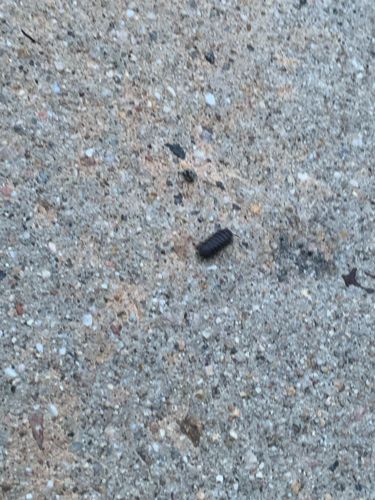
Pill Bug or Sow Bug (general term: Isopod)
Armadillidium vulgare (Common Pill Bug) or Porcellionides pruinosus (Common Striped Sowbug) - specific identification without clearer view is difficult, but it belongs to the Oniscidea suborder.
- Order & Family
- Order: Isopoda, Suborder: Oniscidea, Family: Armadillidiidae (for Pill Bugs) or Porcellionidae (for Sow Bugs)
- Size
- Typically 0.5 to 1.5 cm (0.2 to 0.6 inches) in length.
Natural Habitat
Damp, dark places outdoors such as under rocks, logs, leaf litter, mulch, potted plants, and discarded materials. They require moisture to breathe through gill-like structures. Can sometimes be found indoors in damp basements, crawl spaces, or bathrooms, but usually don't thrive there.
Diet & Feeding
Mainly detritivores, feeding on decaying organic matter such as rotting wood, fallen leaves, decaying plants, fungi, and sometimes soft fruits or vegetables. They play a role in decomposition.
Behavior Patterns
Terrestrial crustaceans, active at night or in moist, dark conditions during the day. They have a slow, deliberate movement. When threatened, some species (like Pill Bugs) can roll into a tight ball as a defense mechanism, while others (like Sow Bugs) will just remain still or try to escape.
Risks & Benefits
Risks: Generally harmless to humans and do not bite or sting. Large populations in gardens can sometimes nibble on young seedlings or soft fruits, especially in very wet conditions, but this is usually minor. Indoors, they are mostly a nuisance pest, indicating high humidity. Benefits: Significant decomposers in ecosystems, breaking down organic matter and returning nutrients to the soil. They are part of the soil food web.