
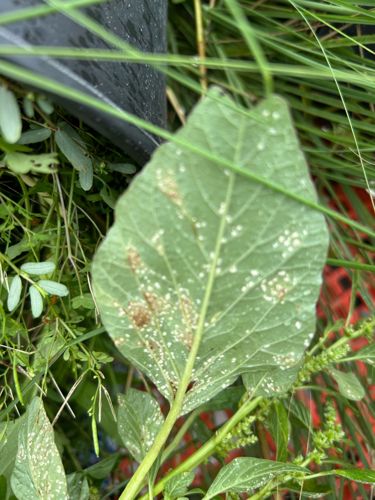
Spider Mite (specifically, Two-spotted Spider Mite is a common culprit for this type of damage)
Tetranychus urticae (for the Two-spotted Spider Mite, but other species exist)
- Order & Family
- Order: Trombidiformes; Family: Tetranychidae
- Size
- Typically 0.2 to 0.5 mm in length. They are barely visible to the naked eye, often appearing as tiny moving dots.
Natural Habitat
Spider mites can be found on a wide variety of plants, including agricultural crops, ornamental plants, trees, and weeds. They thrive in hot, dry, and dusty conditions, both outdoors and indoors (e.g., greenhouses).
Diet & Feeding
Spider mites are phytophagous (plant-feeding) pests. They feed by piercing plant cells with their stylets (mouthparts) and sucking out the cell contents. This causes the characteristic stippling (small dots) on the leaves, which can later turn yellow, bronze, or brown.
Behavior Patterns
Spider mites are known for spinning fine silken webs, especially when infestations are heavy. They tend to congregate on the undersides of leaves. Their life cycle from egg to adult can be very short (5-20 days depending on temperature and species), allowing for rapid population growth. They are highly mobile on plants but do not fly. Dispersal often occurs by wind or by being carried on clothing or tools.
Risks & Benefits
Risks: Spider mites are significant agricultural and horticultural pests. Heavy infestations can cause severe plant damage, leading to reduced yield, stunted growth, leaf drop, and even plant death. They can be particularly problematic in greenhouses where conditions are often ideal for their rapid reproduction. Benefits: In certain ecological contexts, they serve as a food source for various predatory mites and insects, playing a role in the food chain. However, their pest status generally outweighs any perceived benefits in managed ecosystems.