
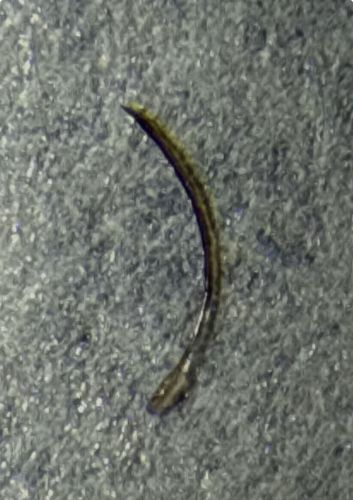
Community identification
Mosquito larva
Culicidae (various genera like Culex, Aedes, Anopheles)
- Order & Family
- Order: Diptera; Family: Culicidae
- Size
- 1 mm to 12 mm (typically around 5-10 mm when fully grown)
Natural Habitat
Stagnant or slow-moving water, including ponds, birdbaths, old tires, drainage ditches, and flowerpots.
Diet & Feeding
Mostly microscopic organic particles, algae, and bacteria filtered from the water.
Behavior Patterns
Larvae, often called 'wrigglers,' use a siphon to breathe air at the water's surface. They are highly active and move in a jerking, wriggling motion when disturbed or feeding. They undergo four growth stages (instars) before pupating.
Risks & Benefits
While larvae themselves are harmless to humans and provide food for fish and birds, they mature into adult mosquitoes which are significant vectors for diseases (e.g., West Nile, Malaria, Zika) and are biting pests.