
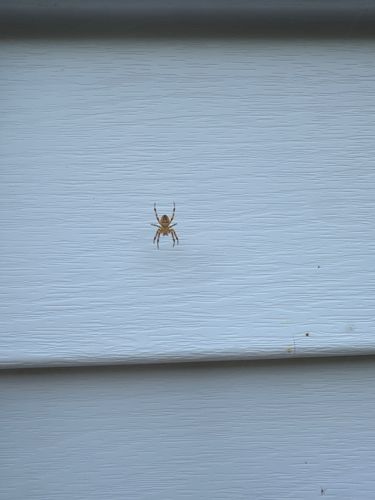
Orb Weaver Spider (likely Cross Orb Weaver or a similar species)
Araneidae (various genera and species, e.g., Araneus diadematus if Cross Orb Weaver)
- Order & Family
- Order: Araneae, Family: Araneidae
- Size
- Body length varies by species and sex, but typically ranges from 5 mm to 20 mm (0.2 to 0.8 inches) for females; males are often smaller.
Natural Habitat
Orb weavers are found in a variety of habitats, including gardens, forests, fields, and around human structures. They prefer areas with good anchor points for their large webs, such as between trees, shrubs, fences, or building eaves.
Diet & Feeding
Mainly insects caught in their orb webs, such as flies, mosquitoes, moths, and other small flying insects. They inject venom to immobilize prey and then wrap it in silk before consuming it or storing it.
Behavior Patterns
Orb weavers are known for spinning impressive, intricate, circular webs, often at night. They typically sit in the center of their web or hide nearby, often with a signal line to detect vibrations from prey. They consume their web daily and rebuild it to maintain stickiness and efficiency. Many species are more active at night.
Risks & Benefits
Risks: Orb weaver spiders are generally not dangerous to humans. Their venom is mild and typically only causes localized pain and swelling similar to a bee sting if a bite occurs, which is rare as they are not aggressive. Benefits: They are highly beneficial in controlling insect populations, especially garden pests like flies and mosquitoes. Their presence indicates a healthy ecosystem.