
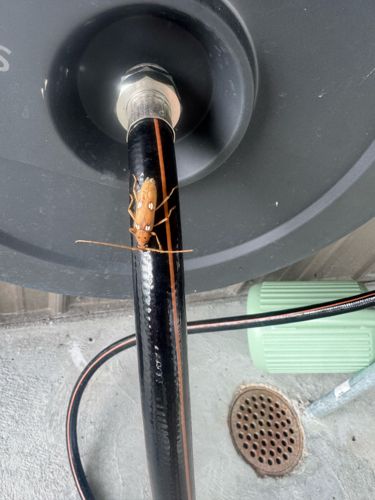
Longhorn Beetle (likely a species of Flower Longhorn Beetle)
Family Cerambycidae (specific genus/species cannot be determined from the image alone, but its appearance resembles species within the subfamilies Lepturinae or Cerambycinae)
- Order & Family
- Order: Coleoptera, Family: Cerambycidae
- Size
- Typically 10 mm to 60 mm (0.4 to 2.4 inches) in length, though some smaller or much larger species exist. The one in the image appears to be in the 15-25 mm range.
Natural Habitat
Found in forests, woodlands, orchards, gardens, and other areas with trees or woody plants. Larvae live inside wood, while adults are found on the surface of trees, flowers, or other vegetation.
Diet & Feeding
Adult longhorn beetles of many species feed on pollen, nectar, sap, or sometimes plant foliage. The larvae (also known as roundheaded borers) are wood-boring, feeding on the wood of living, dying, or dead trees.
Behavior Patterns
Adults are typically active during the day, especially in summer. They are often found on various plants, feeding on pollen or sap. Larvae bore into wood, developing over one to several years depending on the species and environmental conditions. Many species mimic wasps or bees as a form of defense.
Risks & Benefits
Risks: Some species are considered pests, as their larvae can cause significant damage to trees, including valuable timber, fruit trees, and ornamental plants. Benefits: Many species play an important role in decomposition, helping to break down dead wood and recycle nutrients in ecosystems. Some adults are pollinators.