
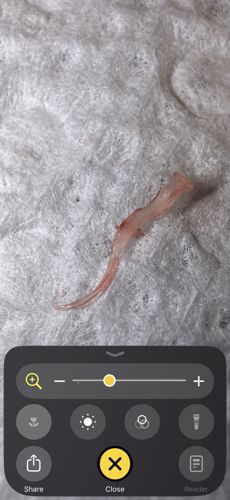
Community identification
Rat-tailed maggot (Larva of the Drone Fly)
Eristalis tenax
- Order & Family
- Order: Diptera; Family: Syrphidae
- Size
- 20 mm to 35 mm (excluding the long breathing tube)
Natural Habitat
Found in stagnant water, sewages, lagoons, or environments rich in decaying organic matter with low oxygen levels.
Diet & Feeding
They feed on decaying organic matter (detritus), bacteria, and microbes found in polluted or stagnant water.
Behavior Patterns
The larva uses a long, telescopic tail-like appendage to breathe atmospheric air while submerged in water. This allows it to survive in highly anaerobic (low oxygen) environments where other larvae cannot.
Risks & Benefits
Benefits: Adults are excellent pollinators. Risks: If accidentally ingested through contaminated water, they can cause accidental intestinal myiasis in humans, leading to gastrointestinal distress.