
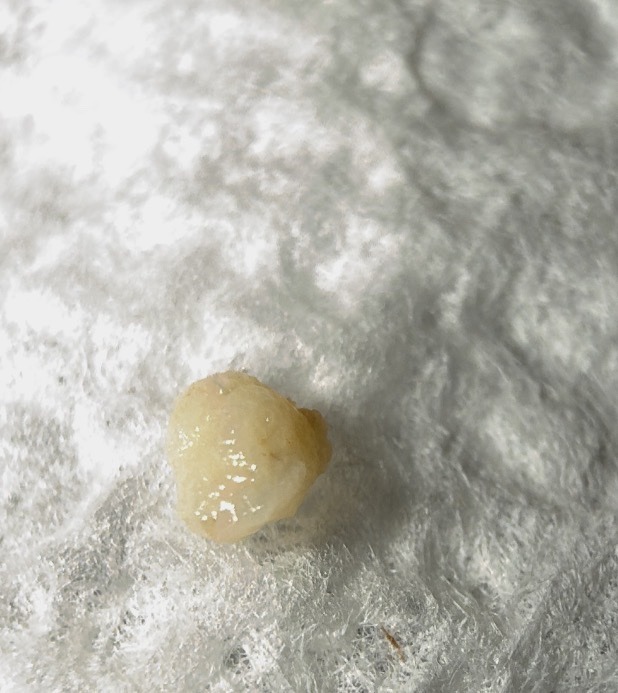
Community identification
Tonsil stone
Tonsillolith
- Order & Family
- Not an insect (Inorganic Calcification)
- Size
- 1 mm to 10 mm
Natural Habitat
Palatine tonsil crypts within the human throat
Diet & Feeding
Not applicable (composed of trapped debris, bacteria, and dead cells)
Behavior Patterns
Formed when debris such as food, dead cells, and mucus becomes trapped in tonsil nooks and hardens over time through calcification.
Risks & Benefits
Potential risks include halitosis (bad breath), sore throat, difficulty swallowing, or ear pain; they provide no ecosystem benefits as they are oral debris.