
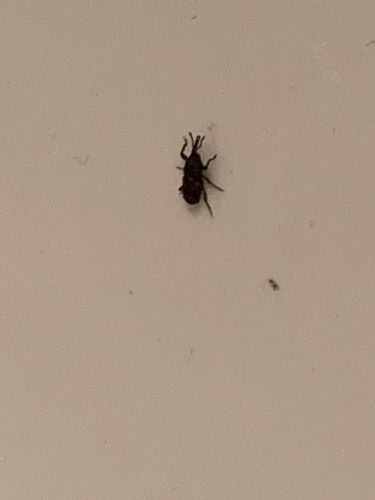
Weevil
Curculionidae (various species)
- Order & Family
- Order: Coleoptera, Family: Curculionidae
- Size
- 1 mm to 40 mm, but common pantry weevils are typically 2-6 mm
Natural Habitat
Found in various environments depending on the species, including fields, forests, gardens, and often indoors in pantries or storage areas where dried foods are kept.
Diet & Feeding
Mostly herbivorous. Many species feed on specific parts of plants (roots, stems, leaves, flowers, fruits, seeds). Stored product weevils (like grain weevils and rice weevils) feed on grains, seeds, nuts, dried fruits, flour, and other stored food products.
Behavior Patterns
Weevils are generally slow-moving. Many species are known for their distinctive elongated snouts (rostrum) at the end of which are their chewing mouthparts. Females often use their snout to bore holes into plant material or seeds to lay eggs inside, providing protection and immediate food for the larvae. Larvae typically feed within the host plant or food item, then pupate there before emerging as adults.
Risks & Benefits
Potential risks include being significant agricultural pests, causing damage to crops and stored food products, leading to economic losses. They are not known to bite humans or transmit diseases. Benefits include some species being used as biological control agents against invasive weeds, and playing a role in decomposition and nutrient cycling in ecosystems.