
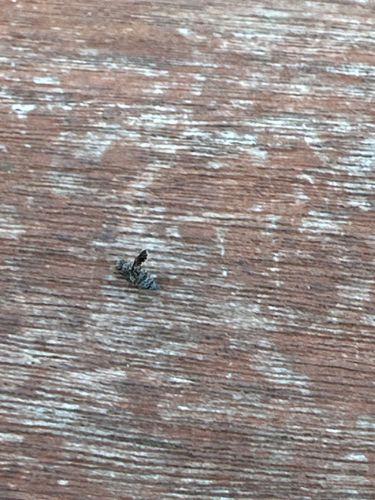
Green Lacewing (likely, or a similar species of Lacewing)
Likely Chrysoperla carnea or another species within the Chrysopidae family, though precise species identification is difficult from this image.
- Order & Family
- Order: Neuroptera, Family: Chrysopidae (Green Lacewings) or Hemerobiidae (Brown Lacewings)
- Size
- Adult lacewings typically range from 10-25 mm (0.4-1.0 inch) in length with a wingspan ranging from 15-30 mm (0.6-1.2 inches). The insect in the image appears to be a small adult, possibly at the lower end of this range or a smaller species.
Natural Habitat
Lacewings are commonly found in gardens, agricultural fields, meadows, and woodlands, often in areas with abundant vegetation and prey.
Diet & Feeding
Adult lacewings feed on nectar, pollen, and honeydew. Some adult species may also prey on small soft-bodied insects. The larvae (also known as 'aphid lions') are voracious predators, primarily feeding on aphids, but also on mealybugs, thrips, mites, and other small insects.
Behavior Patterns
The image shows what appears to be a dead or inactive insect, making it difficult to observe typical behavior patterns. However, adult lacewings are generally active fliers, especially at dusk or night. They are attracted to lights. Larvae are predatory and move actively to hunt for their prey.
Risks & Benefits
Lacewings are highly beneficial insects. The larvae are significant biological control agents, helping to manage populations of various pest insects, especially aphids, reducing the need for chemical pesticides. They pose no risks to humans, pets, or plants.