
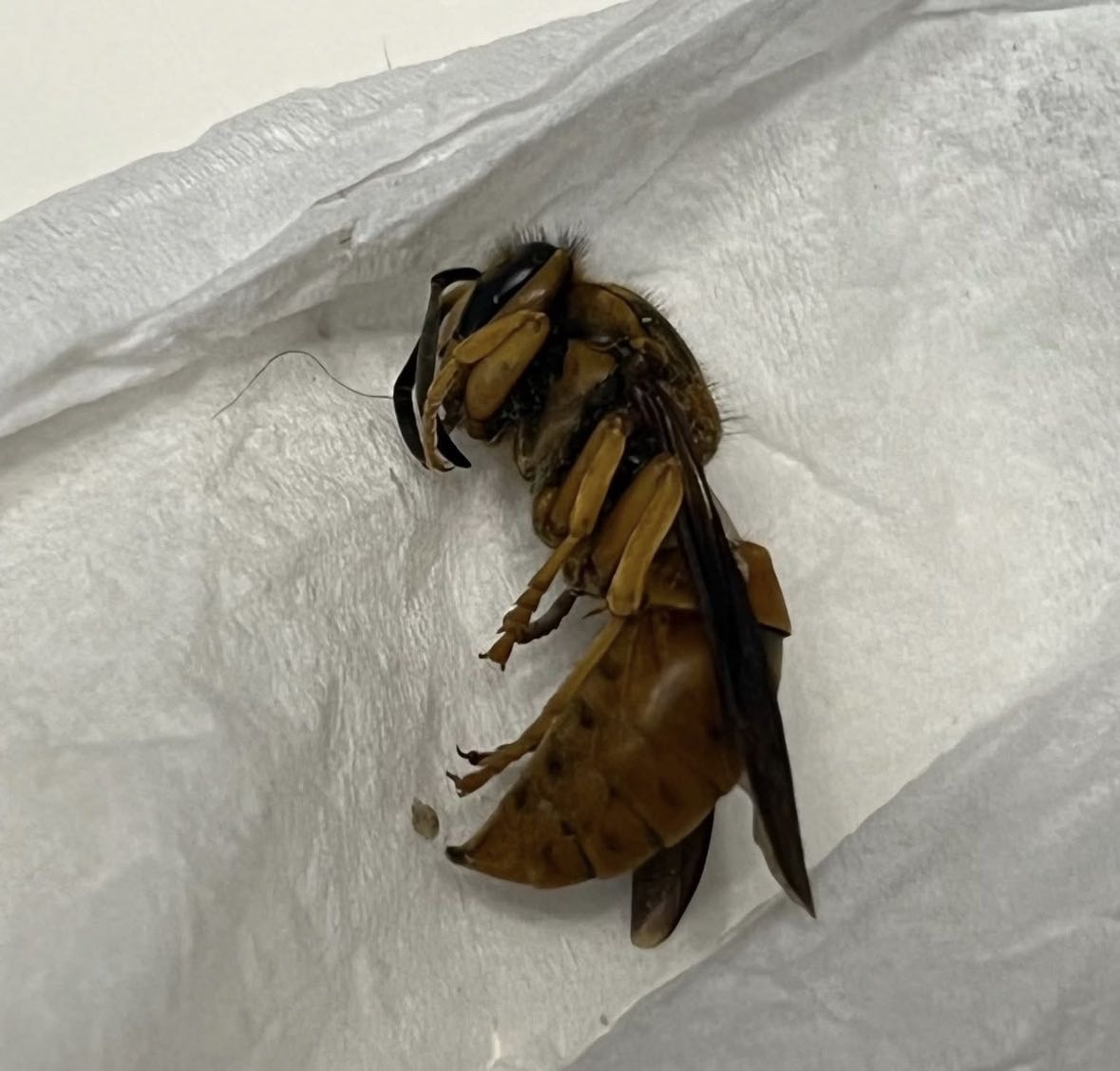
Community identification
European Hornet
Vespa crabro
- Order & Family
- Hymenoptera: Vespidae
- Size
- 25 to 35 mm (roughly 1 to 1.5 inches)
Natural Habitat
Woodlands, gardens, and near human structures where they nest in hollow trees or wall voids
Diet & Feeding
Adults feed on sugary substances like sap and nectar, while they hunt large insects such as flies, beetles, and bees to feed their larvae
Behavior Patterns
Eusocial insects that form annual colonies. They are notably active at night (attracted to lights) and are less aggressive than smaller yellowjackets unless their nest is disturbed
Risks & Benefits
Benefits the ecosystem by controlling garden pests; risks include painful stings which can be dangerous to individuals with venom allergies