
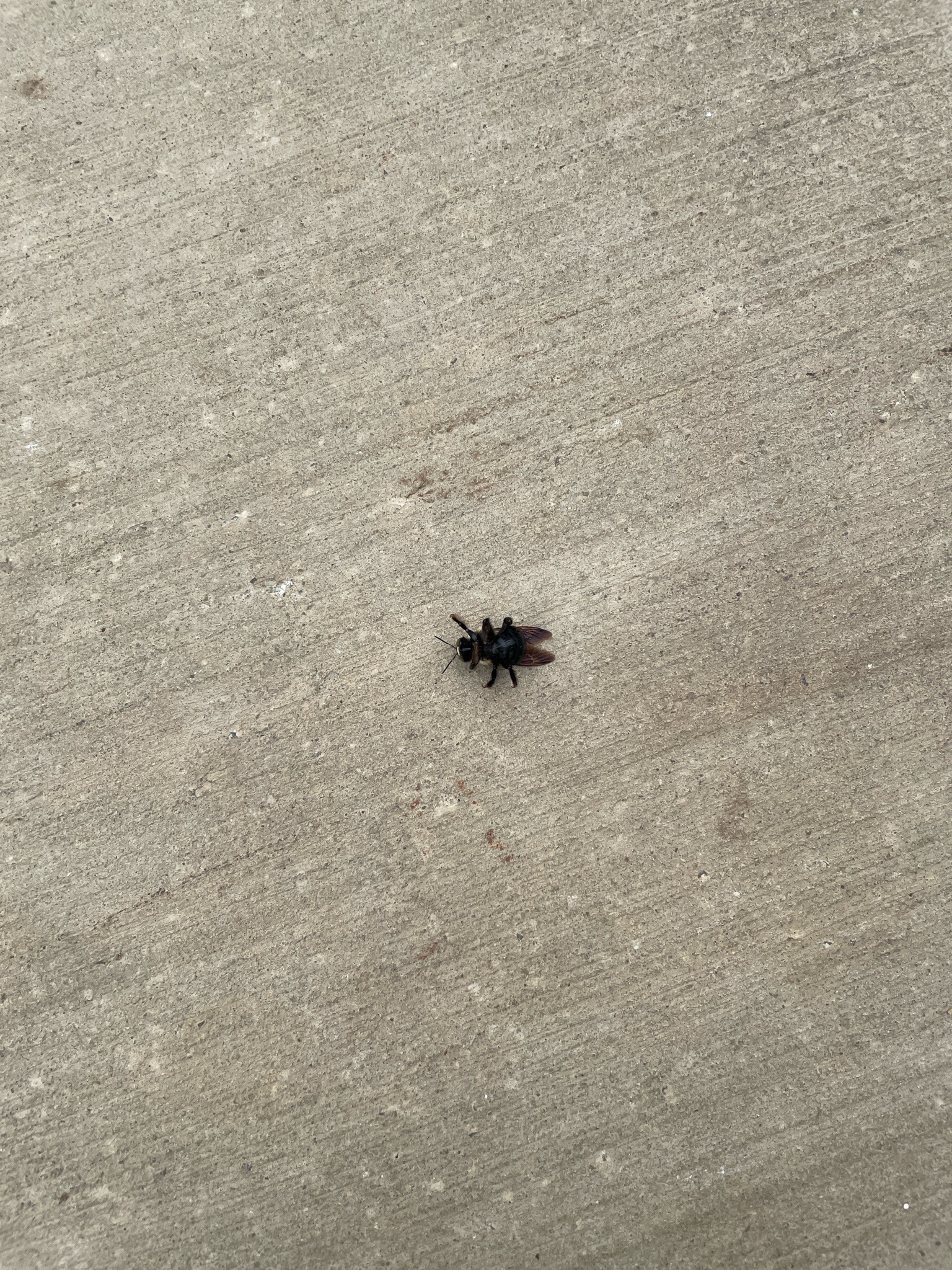
Community identification
Carpenter Bee
Xylocopa virginica
- Order & Family
- Hymenoptera: Apidae
- Size
- 19–25 mm (0.75–1.0 inches)
Natural Habitat
Parks, gardens, and woodlands; famously bores into dead wood, bamboo, or structural timber.
Diet & Feeding
Nectar and pollen collected from a wide variety of flowers; sometimes engages in "nectar robbing" by piercing the base of flowers.
Behavior Patterns
Solitary bees that do not live in colonies. Females excavate tunnels in wood to lay eggs, while males often hover near nests and can be territorial/aggressive in flight, though they lack stings.
Risks & Benefits
Benefits: Excellent pollinators for many native plants and crops. Risks: Can cause structural damage to wooden buildings/decks over time due to seasonal tunnel excavation. Females can sting if handled, but are generally docile.