
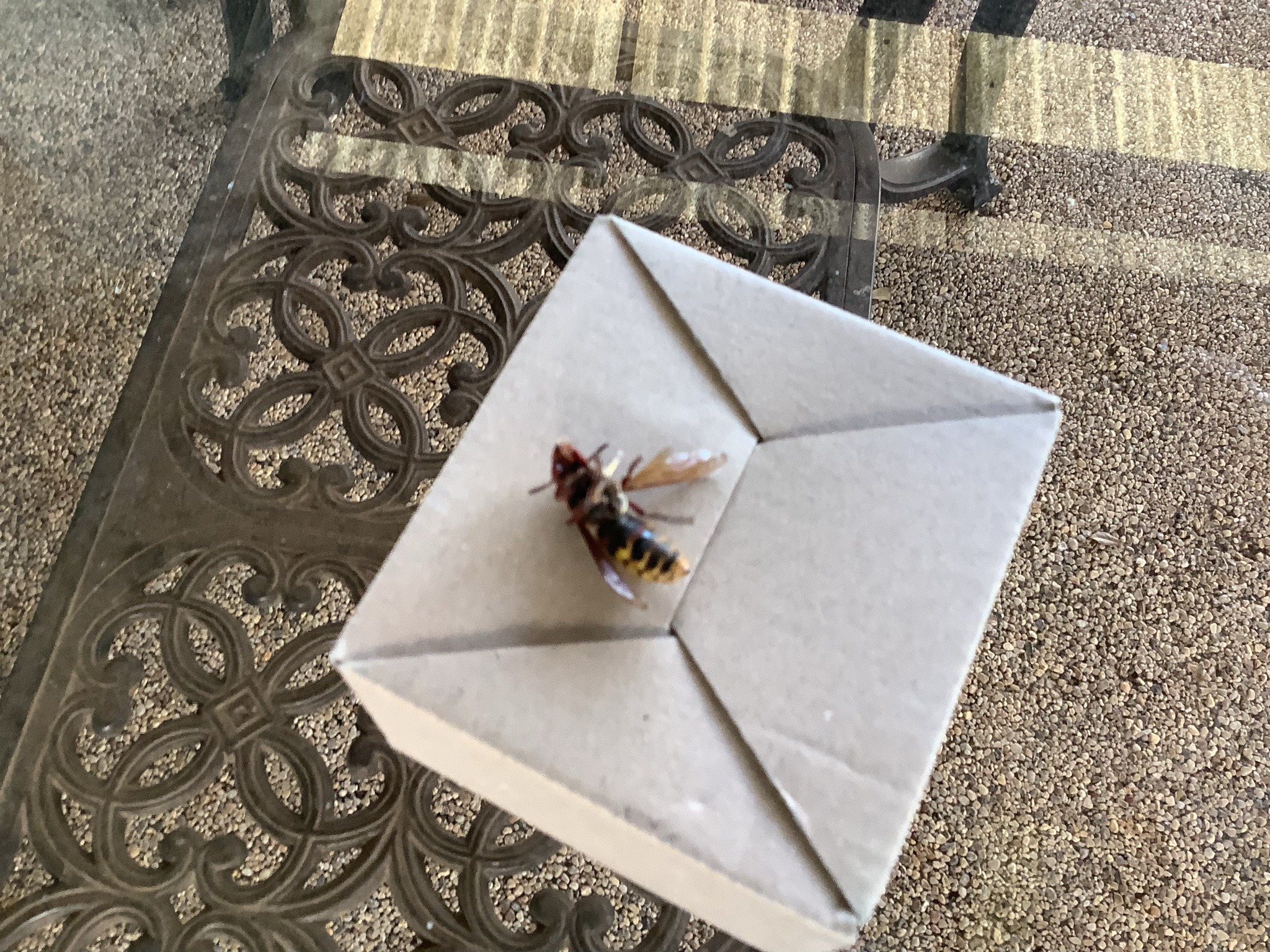
Community identification
European Hornet
Vespa crabro
- Order & Family
- Hymenoptera: Vespidae
- Size
- 25 to 35 mm (approx. 1 to 1.4 inches) in length.
Natural Habitat
Woodlands, gardens, and suburban areas; they often nest in hollow trees, wall voids, or attics.
Diet & Feeding
Carnivorous as larvae (fed insects like flies and caterpillars); adults consume nectar, fruit juices, and tree sap.
Behavior Patterns
Eusocial insects with a queen and workers. Unlike most wasps, they are active at night and attracted to lights. They are typically less aggressive than yellowjackets unless their nest is threatened.
Risks & Benefits
They possess a painful sting that can cause allergic reactions in sensitive individuals. Beneficially, they act as natural pest control by preying on many garden and agricultural pests.