
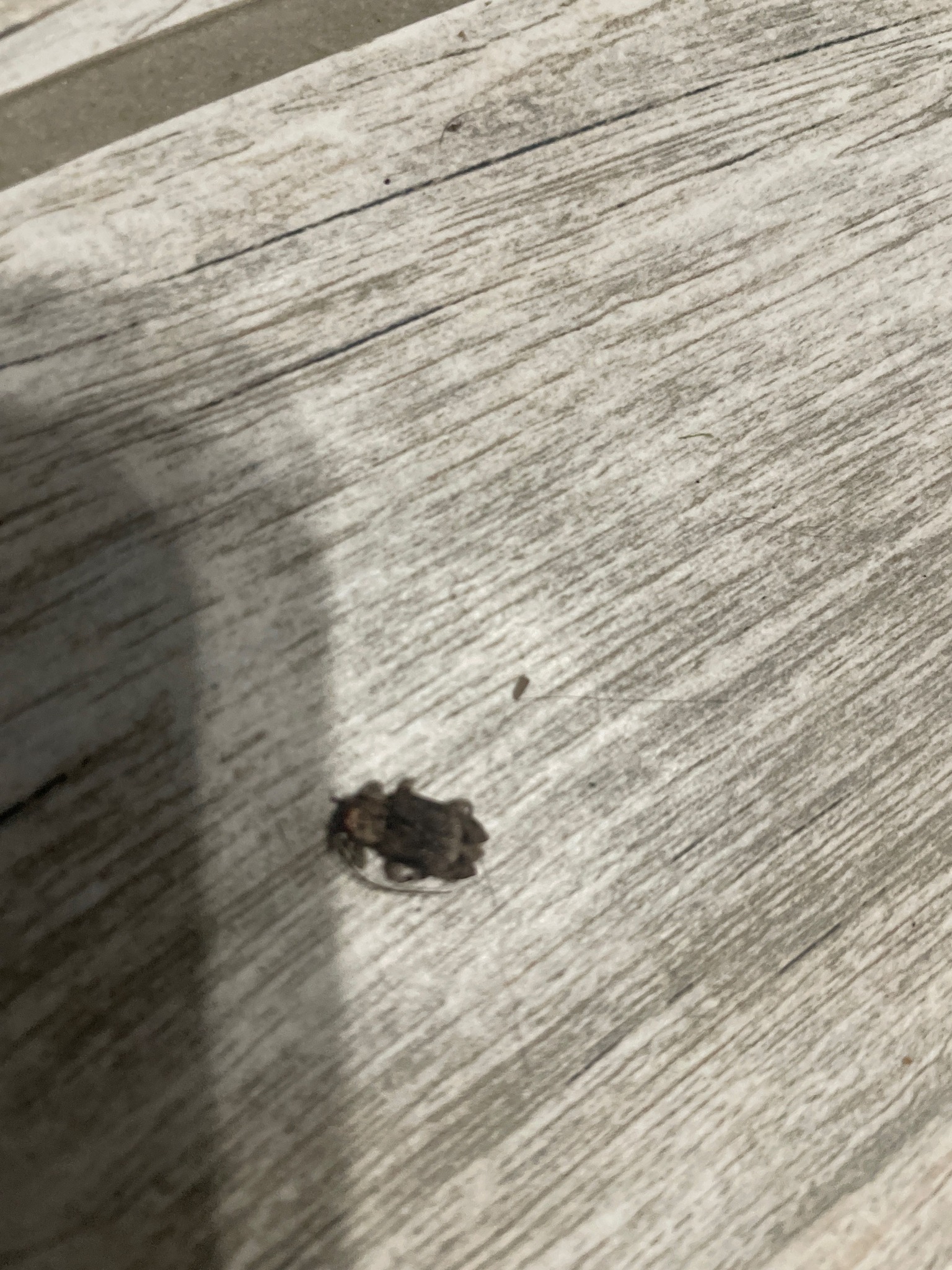
Masked Hunter (Nymph)
Reduvius personatus
- Order & Family
- Order Hemiptera, Family Reduviidae
- Size
- Nymphs are usually 5–15 mm long (adults reach about 17–22 mm).
Natural Habitat
Typically found indoors in dry, dusty areas like basements, attics, and corners, but also lives outdoors around buildings and in wooded areas.
Diet & Feeding
Strictly insectivorous; it preys on other small arthropods including bed bugs, carpet beetles, termites, and earwigs.
Behavior Patterns
Nymphs practice camouflaging by secreting a sticky substance that allows dust, lint, and sand to adhere to their bodies, making them look like a walking 'dust bunny.' They are primarily nocturnal hunters.
Risks & Benefits
Benefits: They are natural pest controllers that eat bed bugs and other household pests. Risks: They are not aggressive but can deliver a very painful defensive bite if handled or trapped against skin; the bite may cause localized swelling but is not medically significant.